Federate AI Summit 2026


Federate AI Summit 2026 Insight Report
What enterprise leaders are learning as federated AI moves into production

Taking Federated AI From Pilot to Program
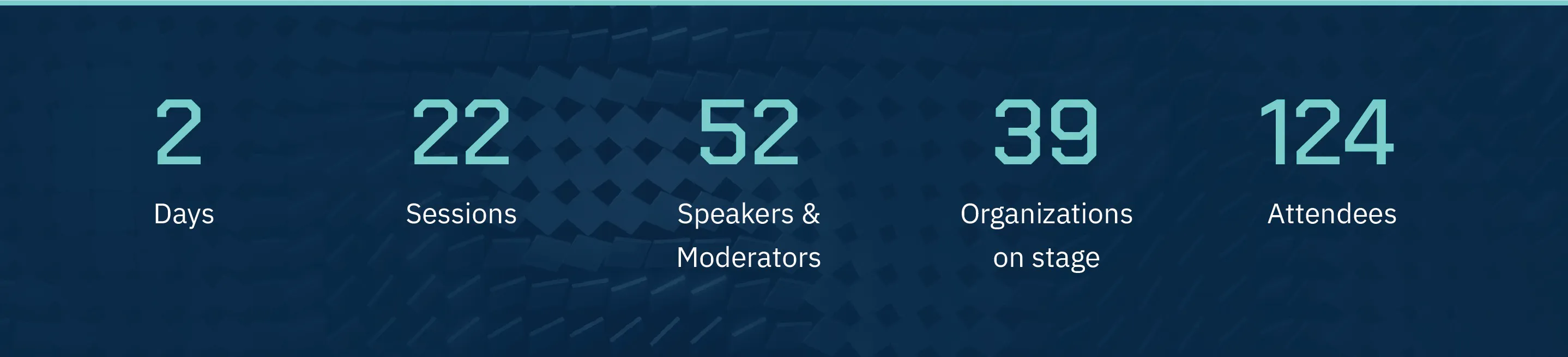
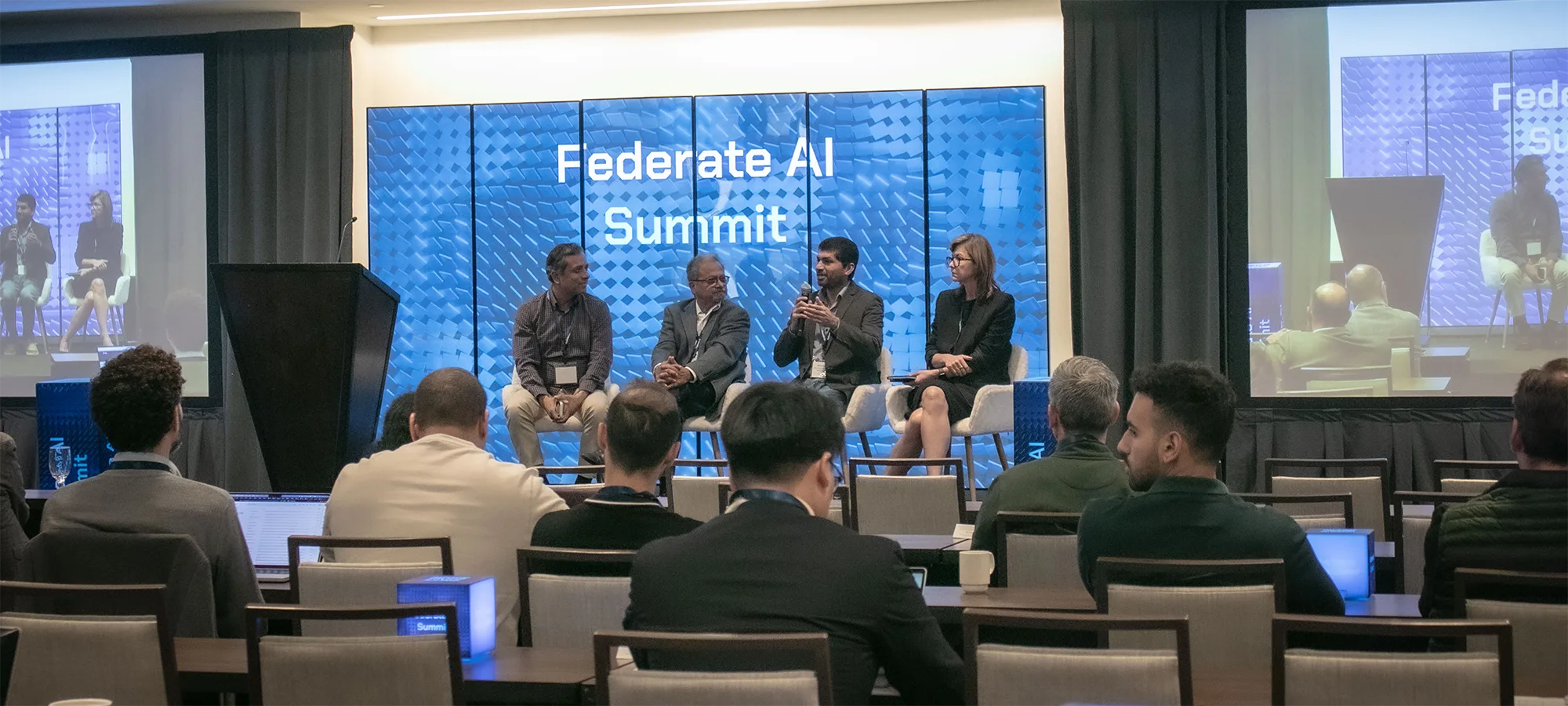
On October 19 and 20, 2026, Rhino Federated Computing hosted the Federate AI Summit in Boston. Over two days and 22 sessions, about 50 leaders from Eli Lilly, AstraZeneca, AbbVie, Amgen, AWS, Google Cloud, NVIDIA, Oracle, Moffitt Cancer Center, Fred Hutch, Memorial Sloan Kettering, and more took the stage to show how they’re putting federated AI to work on data that can’t move.
Across both days, speakers described a future where the world’s most sensitive data can power AI without ever leaving the organizations that hold it. Many are already building it, onboarding hundreds of partners, running federated programs across sites and borders, governing collaborations between competitors, and giving AI agents safe access to data they could never touch before. Five core insights stood out.
Key Takeaways
- Federated AI has moved from proof to scale. Eli Lilly’s TuneLab grew to 140 member companies in about a year.
- Repeatable processes turn a federated pilot into a program. Teams that build site setup once and reuse it onboard each new site from a playbook.
- Training across sites with different data builds models that hold up everywhere. Federated models outperformed single-site models in COVID-19 care and breast cancer research.
- Federated collaboration works without partners trusting each other. The hardest problems are organizational, so governance has to be built in from the start.
- AI agents can borrow federated computing’s playbook for sensitive data. Local authority, sandboxed execution, and output checks apply to agents just as they do to federated workloads.
Federate AI Summit by the Numbers
Connecting Federated AI to the Systems Enterprises Already Run
Rhino announced Trusted Integrations and Workflows during the Summit, two new capabilities on the Rhino Federated Computing Platform (Rhino FCP) that help organizations turn a successful federated pilot into a program that runs at every site.
A pilot can run on hand-built scripts, but a program has to repeat that work at every site, on the systems each site already runs, with a record of what ran and what left each site. Without that foundation, every new site or data refresh means rebuilding by hand.
- Trusted Integrations connects each Rhino Client to systems inside a customer’s secure perimeter, including Snowflake, InterSystems, FHIR servers, and foundation models on Amazon Bedrock. Customers keep control of their source data and networking, and only what the integration allows crosses the connection.
- Workflows packages multi-step federated work into a versioned pipeline that runs the same way at every site, on each site’s own data, with a record of every run. Adding a site or refreshing data means rerunning the Workflow, and AI agents act only through steps a team has defined and can review.
Both capabilities are available now.
Want to see Trusted Integrations and Workflows running on your own stack? Reach out to our team for a demo.
Insights From the Summit
Trusted Integrations and Workflows address one part of a broader shift that played out across both days of the Summit. Speakers from pharma, health systems, cloud providers, research institutions, and beyond described what changes once federated AI works and what it takes to scale it.
That shift starts with the question that’s on everyone’s minds these days.
1. The Federated AI Question Has Moved From “Does It Work?” to “How Fast Can We Join?”
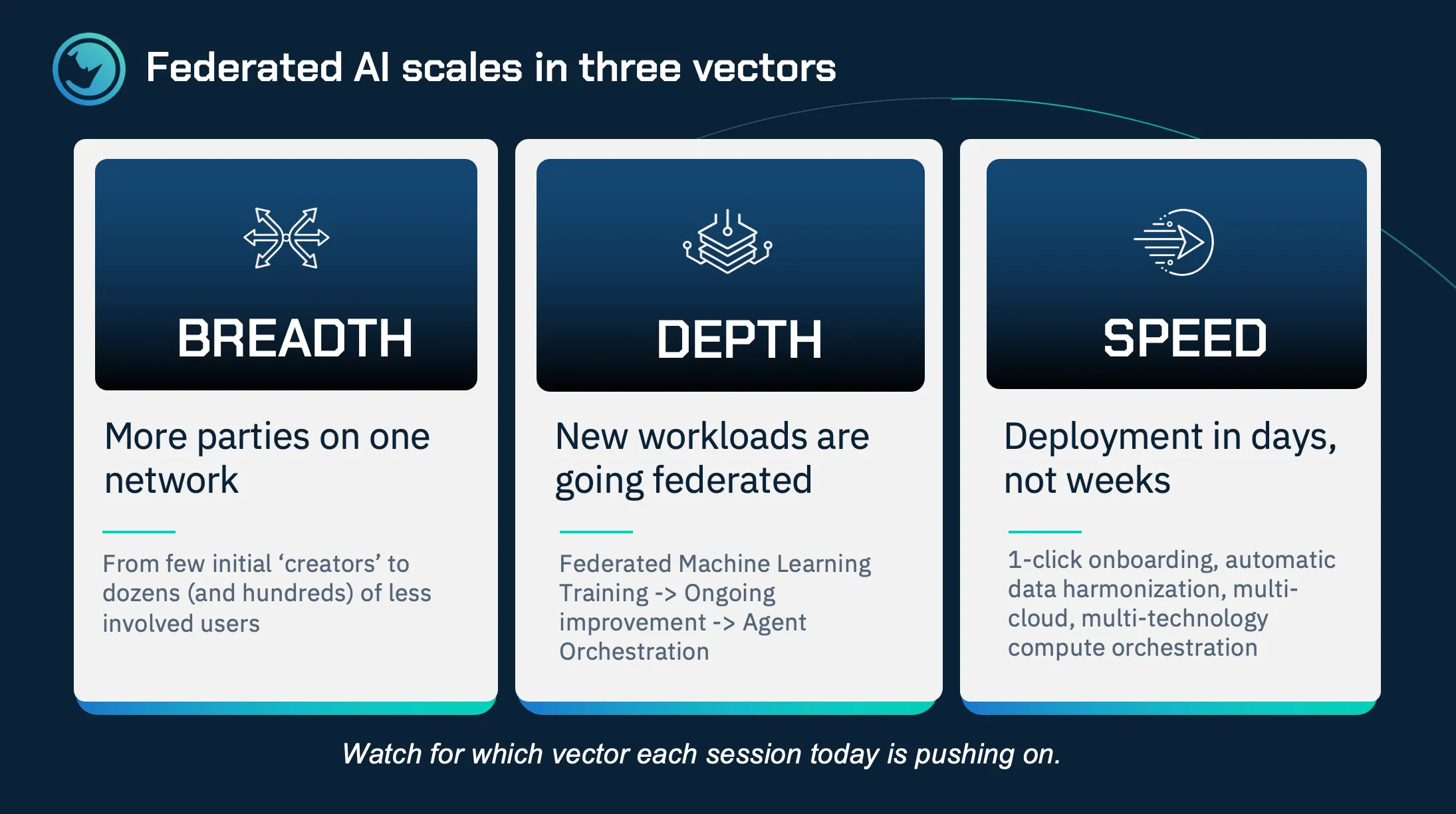
A year ago, whether federated AI could sustain even one consortium remained partly unanswered, Ittai Dayan, CEO of Rhino Federated Computing, said in his opening keynote. The conversation has since shifted to how networks scale: in breadth, as more parties join; in depth, as new workloads become federated; and in speed, as the time from joining to value shrinks.
Eli Lilly’s TuneLab made the case in numbers. Jonathan Gilbert, Senior Director of Ecosystem Growth and Contributor Partnerships at Eli Lilly, said TuneLab has grown to 140 member companies since its public launch about a year ago. Lilly seeded its small-molecule models with just over 2 million data points. Partners have since contributed 675,000 more, and on some endpoints the contributed data now exceeds Lilly’s own.
“At first I spent most of my presentations explaining what federated learning was, and now it’s moving to more practical implications. How quick can I join? What models do I have access to?”
Jonathan Gilbert, Senior Director, Ecosystem Growth and Contributor Partnerships, Eli Lilly
Holger Roth, Principal Federated Learning Scientist at NVIDIA, traced the same arc back to the EXAM study in the early days of COVID-19, when starting a single training job meant coordinating by hand with every hospital. Today he puts cross-silo collaboration, where institutions such as hospitals and pharma companies train together, at more than 90% of the use cases he sees.
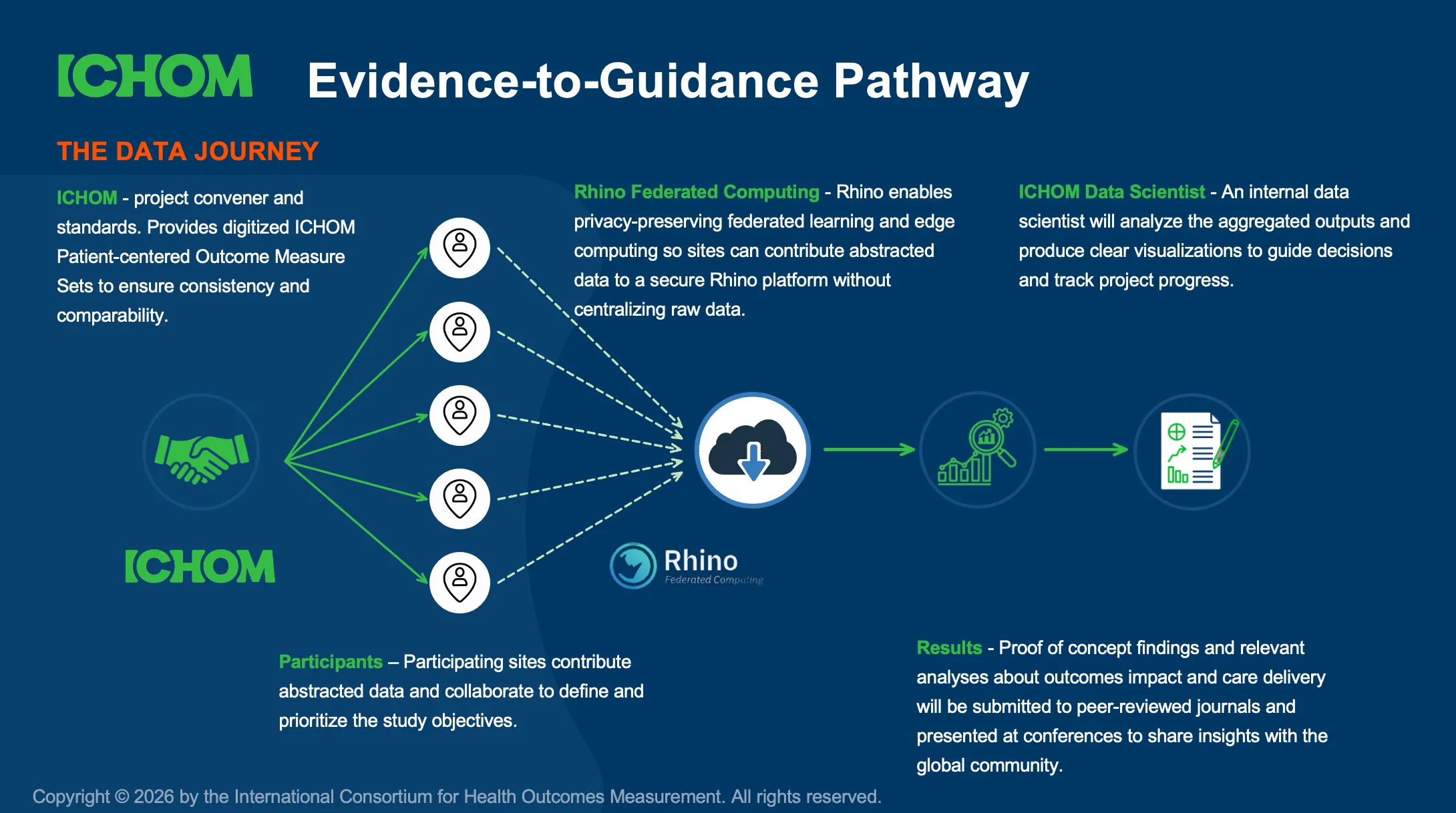
Other networks showed how far breadth now reaches. PROBE, a research consortium presented by Mohammad Bakhtiari of the University of Hamburg, trains a single model across 39 partners on two continents, with more than 70 million individuals represented in its data sets. ICHOM, the global nonprofit that standardizes how health outcomes are measured, runs a breast cancer learning collaborative spanning 18 hospitals in 14 countries. Memorial Sloan Kettering’s Nevenka Dimitrova, Computational Oncology Consulting Scientist, described linking MSK’s 11 million digitized slides and deep molecular data with the imaging other hospitals already hold.
Depth is growing as well, as federation reaches problems well beyond multi-party research. Dayan described a pharma company that saw no need to buy outside data; instead, it needed a way to query the data it already held across its own silos. He expects that single-enterprise use case to make up most of the market over time. Swati Gupta, Head of Applied AI at F2 Strategy, sees the same challenge in investment management, where data is fragmented across systems inside each firm and scaling AI depends on building governed, reusable data sets.
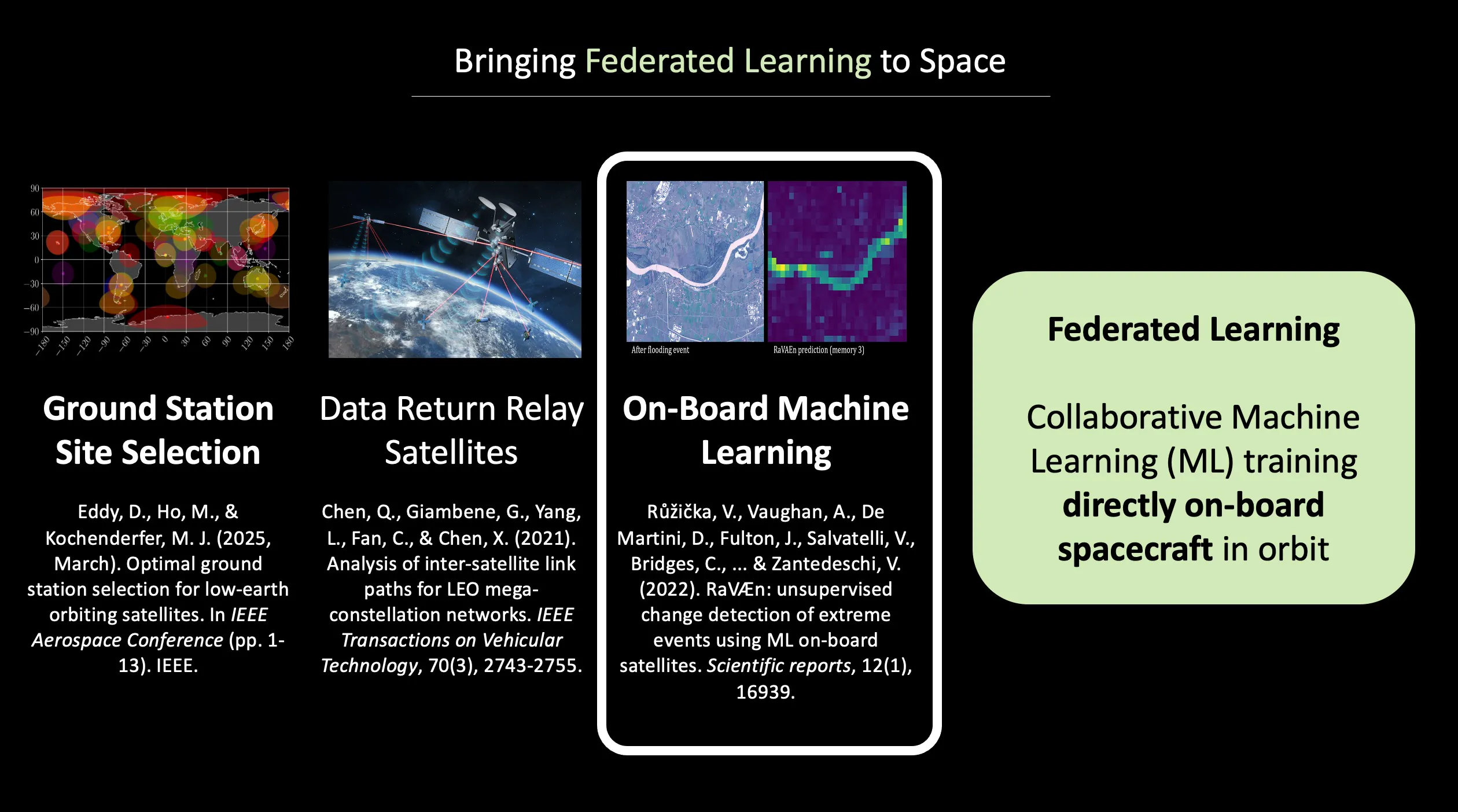
In other industries, connectivity matters as much as privacy. Grace Kim, a PhD candidate at Stanford, described satellite constellations that generate terabytes of imagery a day but can downlink only a fraction during brief ground-station contacts. Abdallah Abdallah, who led a federated manufacturing project at Western Carolina University, found factory sensor data synchronizing hourly while machines produced a batch every 12 seconds. In both cases, training where the data is generated was the only practical option.
2. Repeatable processes turn a federated pilot into a program.
As federated networks grow, the model is rarely what slows them down. Speakers who run these networks pointed to three things that do: the staff time each site requires, coordination across partners, and the lack of a process that can be repeated at the next site.
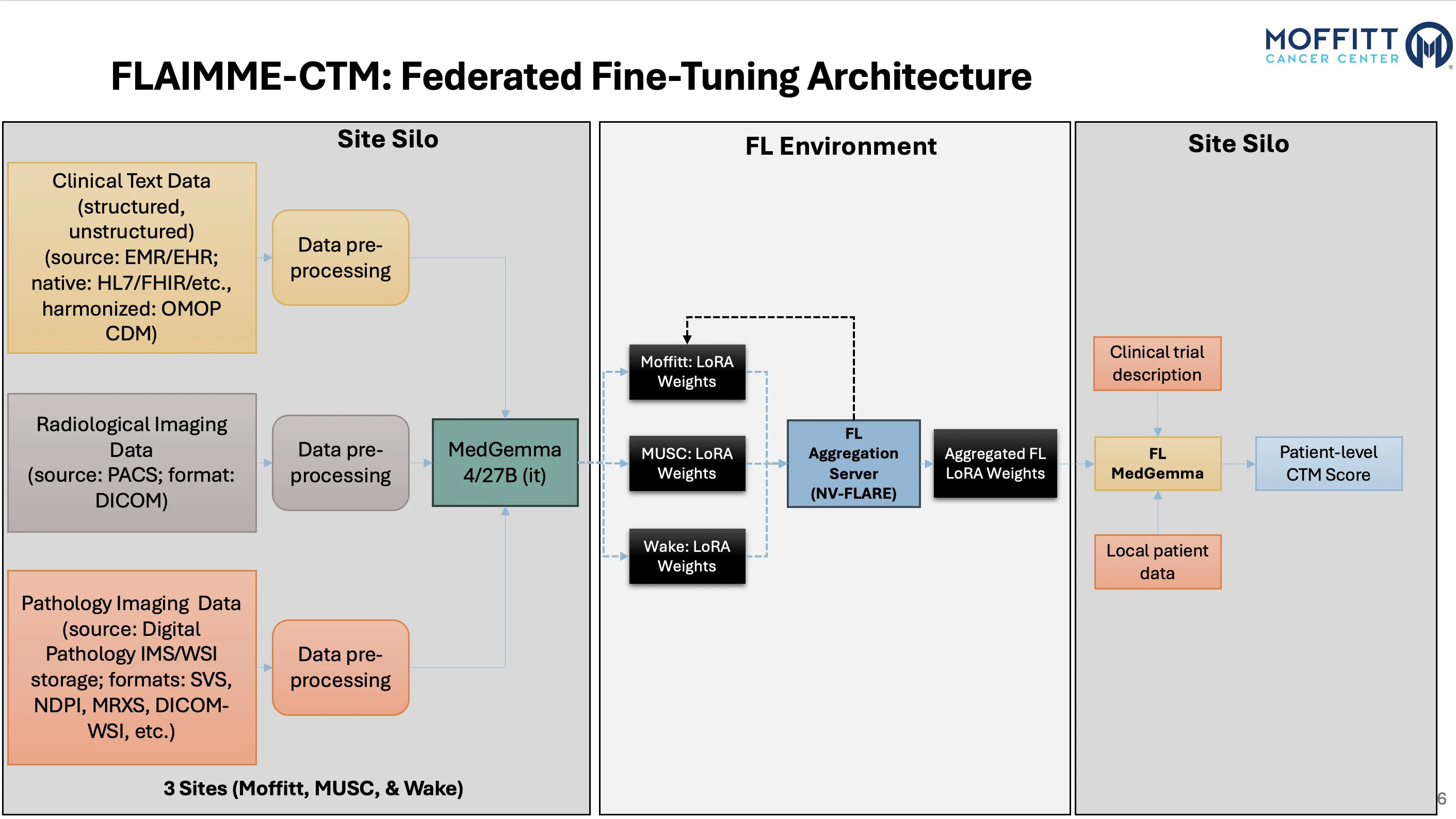
Ghulam Rasool, Associate Member in Machine Learning at Moffitt Cancer Center, works on FLAIMME, an NCI-backed federated learning consortium, including Moffitt. When asked how he justifies the cost of a federated platform, he pointed to people: every participating site needed staff to install and maintain the federated learning framework and prepare data.
“Implementation of federated learning is not trivial, and we spent a lot of time on doing those things rather than focusing on the science.”
Ghulam Rasool, Machine Learning, Moffitt Cancer Center
Coordination grows harder with every partner. Mohammad Bakhtiari said PROBE’s decisions about data access, harmonization, models, and compute depend on one another, so a choice made at one of 39 partners can surface as a problem months later at another. Much of that coordination happens up front. Once agreements, IRB approvals, and security reviews are in place, later projects start far faster, and review boards have generally treated the sharing of model updates as minimal risk.
To cut the staffing burden, coordination load, and one-off setup at each site, speakers recommended building the process once and reusing it everywhere. Olivia Choudhury, Principal Partner Solutions Architect at AWS, recommended aligning executives and data custodians early, starting with a two-site proof of concept that compares federated and local models, and documenting every requirement so the next wave of sites can onboard from a playbook.
AstraZeneca has put that approach into practice. Tami Landau, Senior Data Scientist at AstraZeneca, and David Solooki, Forward Deployed Engineer at Rhino, presented a COPD registry built across two Israeli health maintenance organizations. The team ran privacy-preserving cohort summaries and analyses with the statistical libraries its data scientists already use, and designed the pipeline so additional sites can run it unchanged. Its findings, covered in the next section, show why the extra sites matter.
“When you grow a federated network, most of the time it’s not the model training that stalls you.”
Antoni Abella Vendrell, VP of Product, Rhino Federated Computing
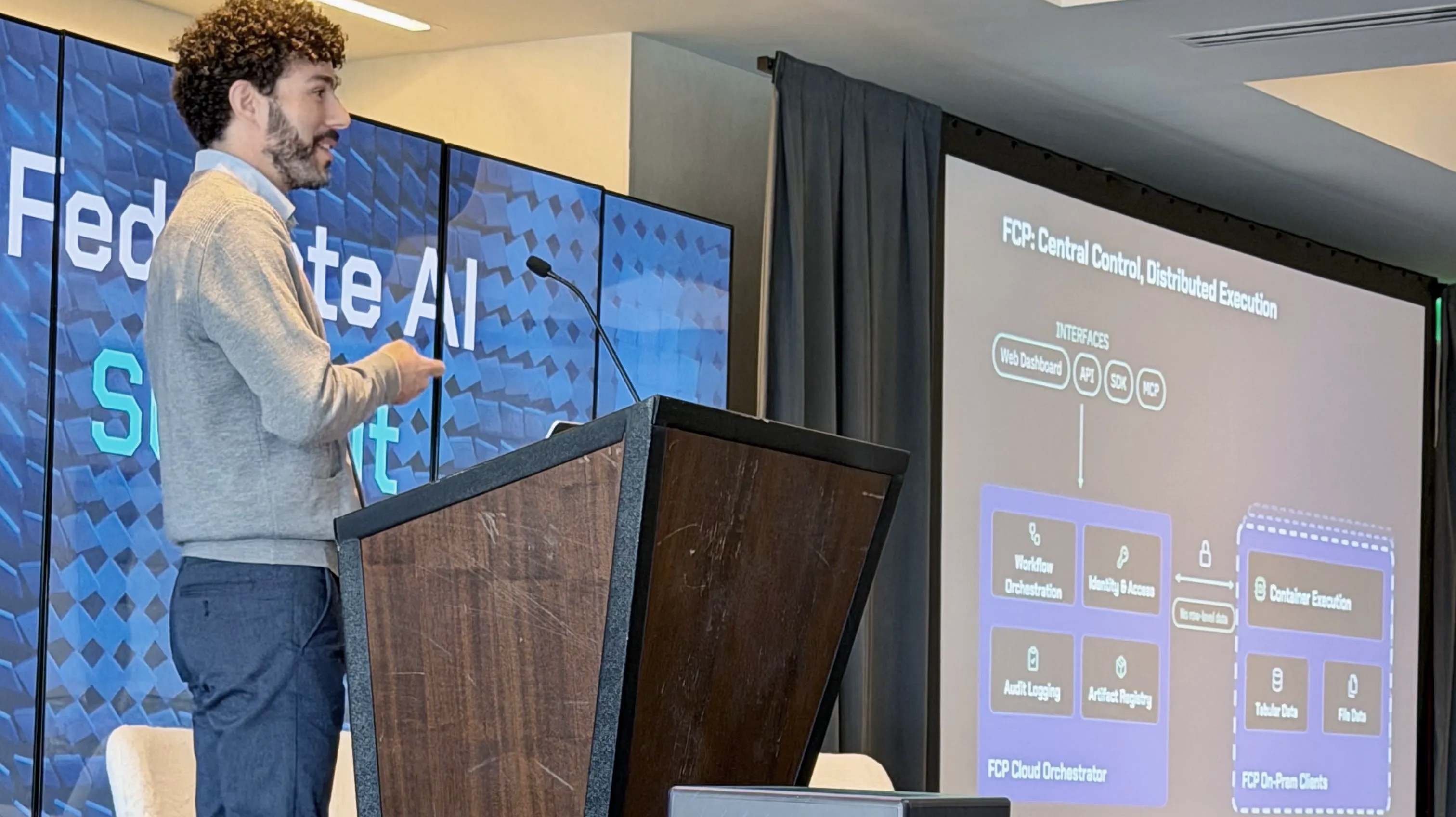
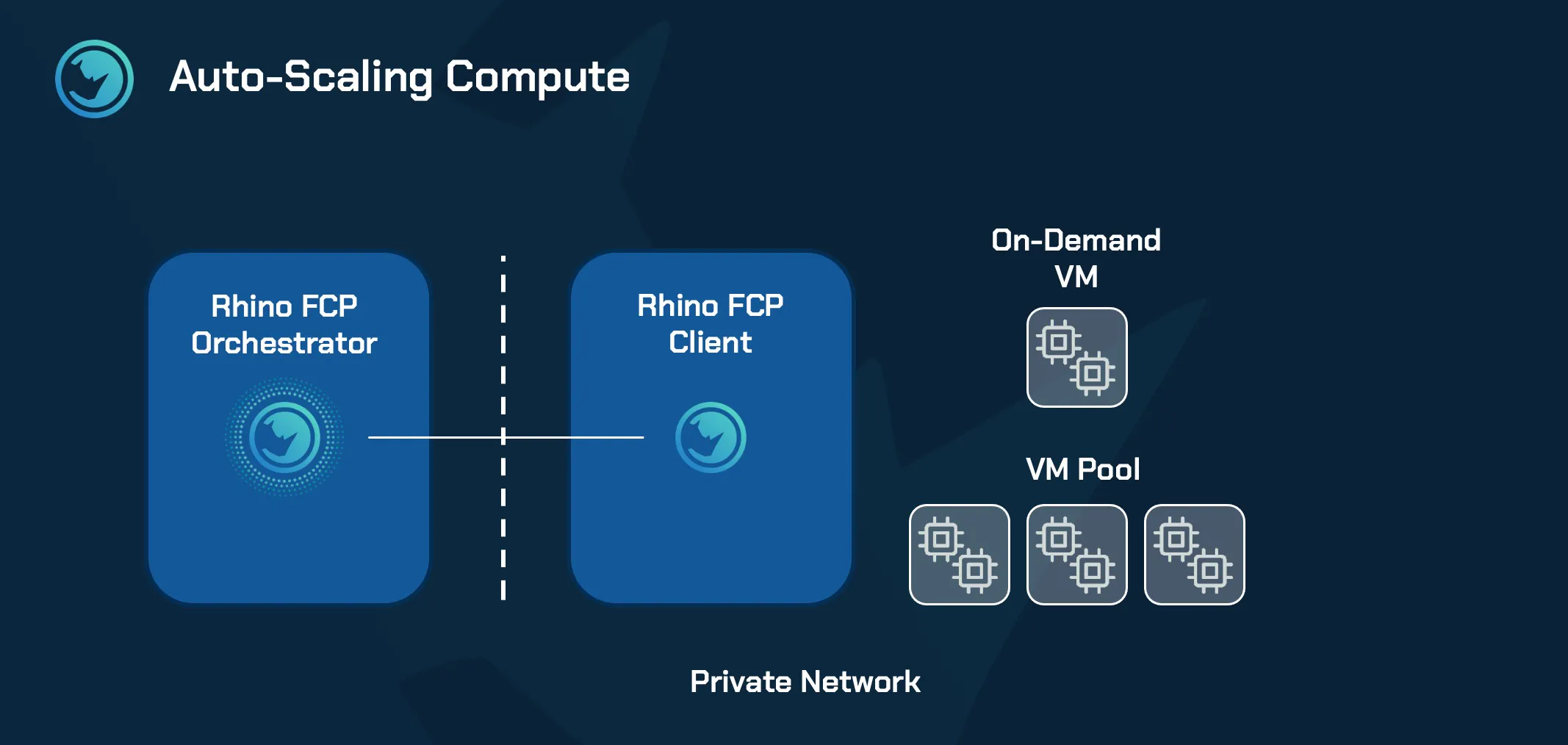
Tal Tiano Einat, VP of R&D at Rhino, demonstrated how Workflows brings the same discipline to the Rhino FCP, turning exploratory, AI-assisted analysis into a versioned pipeline that runs the same way at every site.
3. Data That Differs From Site to Site Makes Federated Models Stronger
No two hospitals image, record, or treat patients the same way, so a model trained at one site often falters at the next. Training across sites exposes a model to that full range, and speakers showed the payoff in their results.
The EXAM study made the case early on. Joshua Kaggie, Assistant Research Professor at the University of Cambridge, recalled how 20 hospitals worldwide trained a model to predict which COVID-19 patients would need oxygen support. Every site’s results improved over its local model, some by as much as 0.3 in AUC, despite wide differences in patient age and volume.
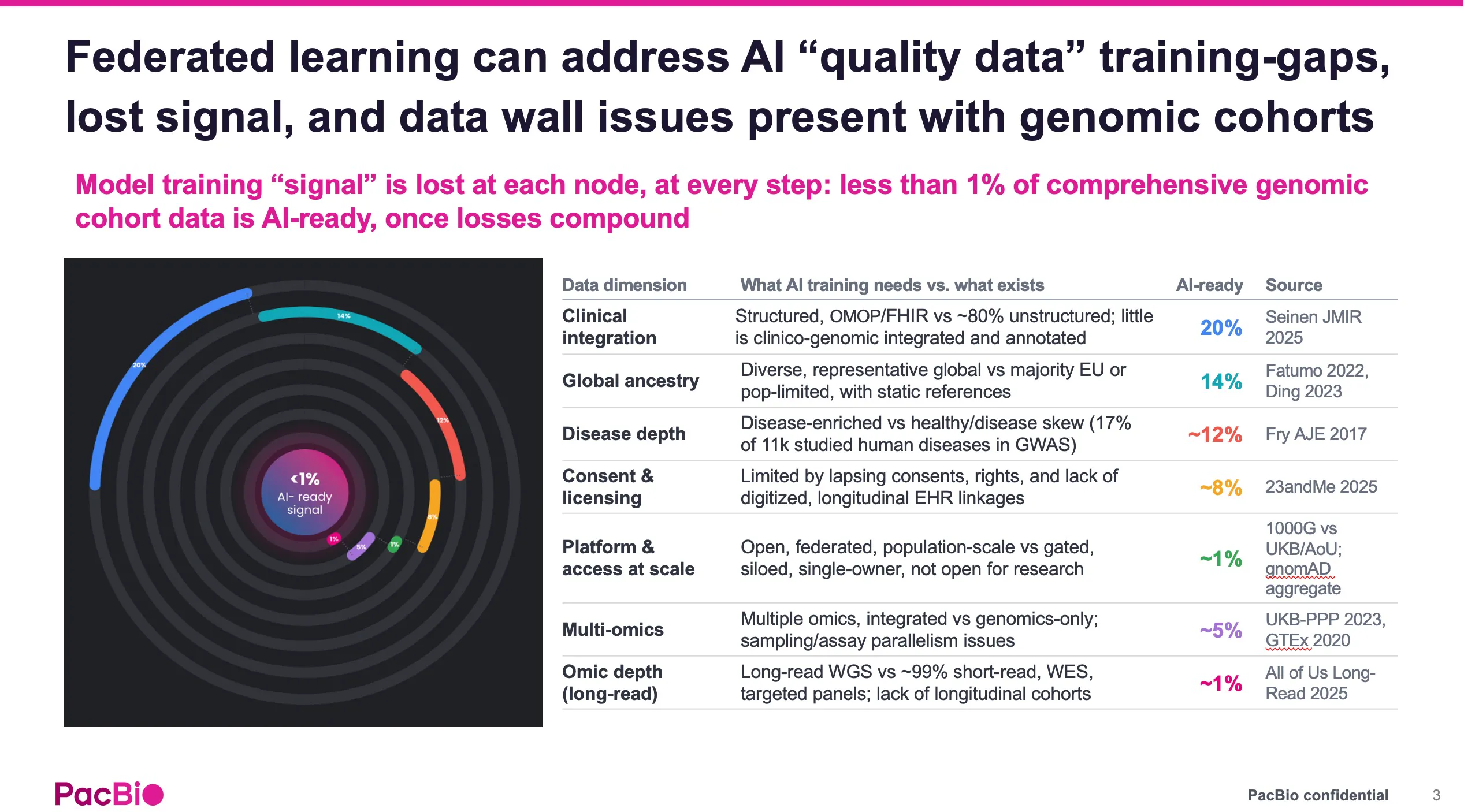
Those differences show up everywhere. Kaggie noted that emphysema can affect 12% of patients in one US region and 4% in another. In genomics, the gap is wider still. Ravi Madduri, Senior Scientist and Group Leader at Argonne National Laboratory, noted that about 94% of available genomic summary statistics come from people of European ancestry. Mark Van Oene, CEO of PacBio, sees federation as the way to reach more diverse genomic data while each country keeps control of its own.
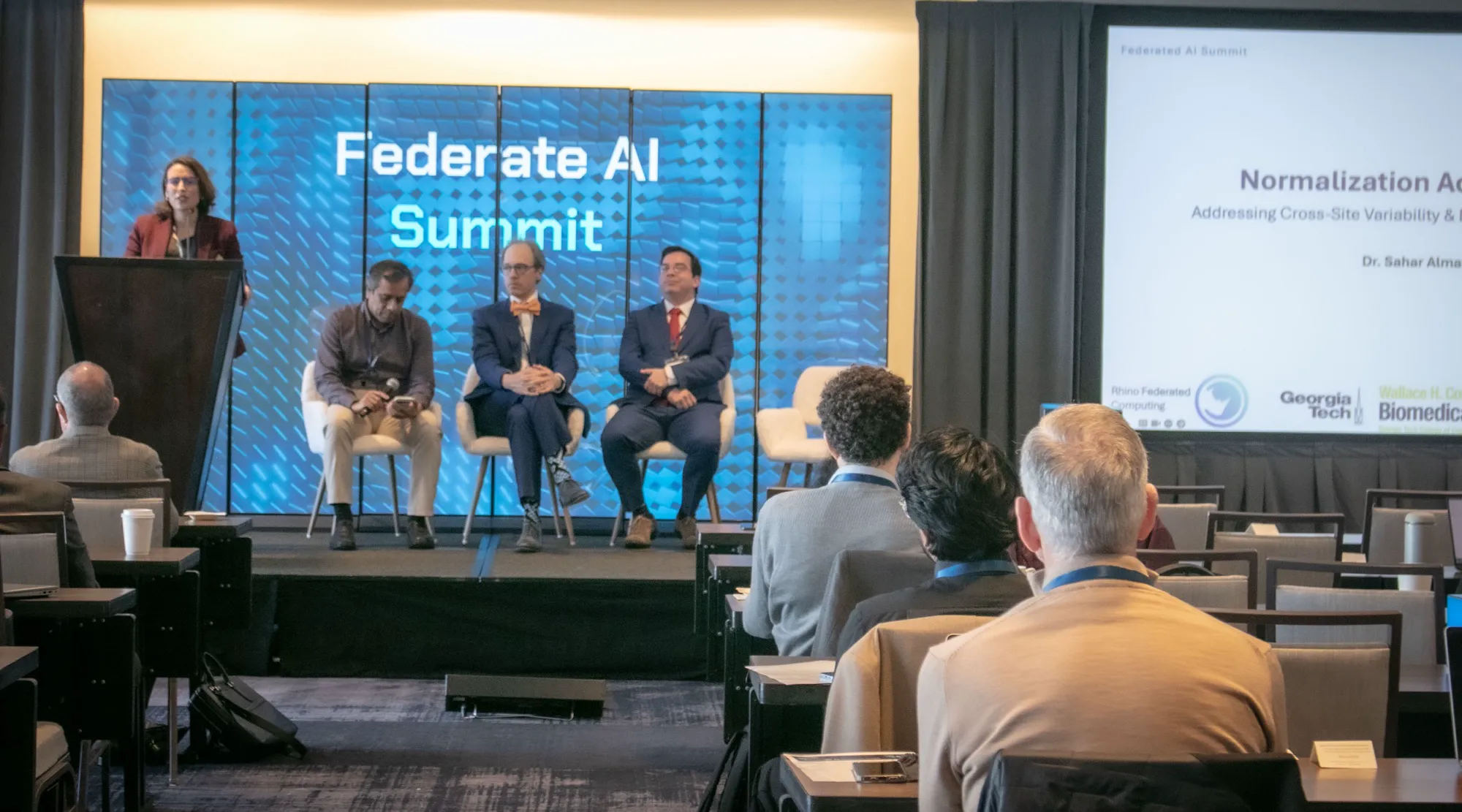
Sahar Almahfouz Nasser, Postdoctoral Fellow at Emory University, saw the same pattern in breast cancer research. Her team is building a model that predicts survival risk from routine pathology slides, with the goal of cutting the cost of today’s genomic risk testing by about 98%. Models trained at single sites could not reliably separate high-risk from low-risk patients. The federated model did, with statistically significant results that held up on an outside data set.
Federation also shows where sites disagree, which matters as much as the pooled answer. In AstraZeneca’s COPD registry, Tami Landau found that combining two health systems produced more precise estimates than either could alone. Comparing each site against the pooled result showed both agreed on age as a risk factor, while one therapy looked strongly protective at one site and showed no effect at the other, likely because of different prescribing habits.
“Federated analysis provides pooled results and, by comparison with each HMO’s own estimate, it reveals where pooling is appropriate and where it is not.”
Tami Landau, Senior Data Scientist, AstraZeneca
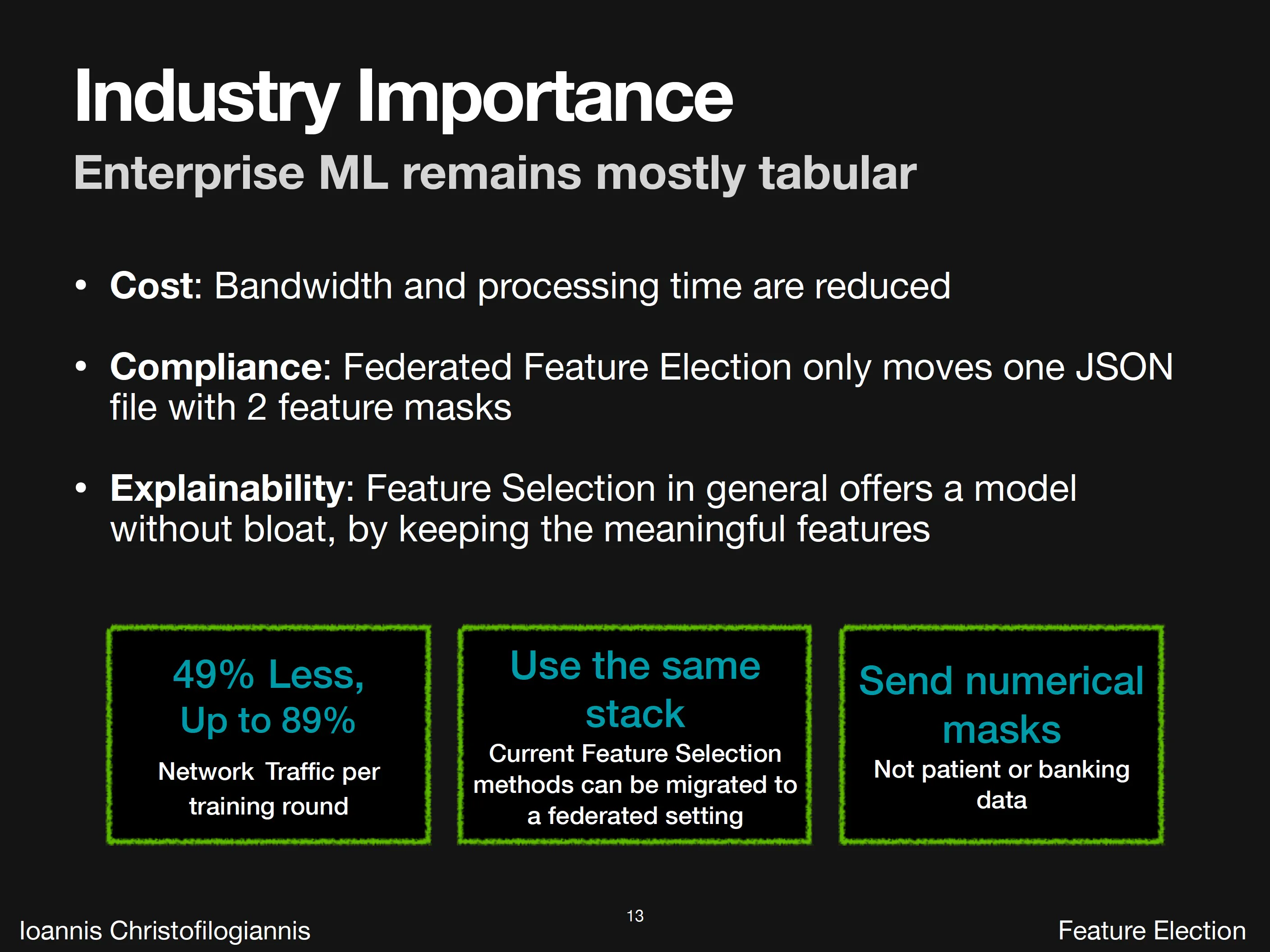
However, those comparisons only work when every site’s data speaks the same language, and getting there is harder than it looks. Nicolas Löffler-Perez, Data Scientist at Veanu, described health agencies that started from one internationally agreed format for medical device incident reports, only to find their databases had drifted apart over years of local changes. Models trained at one agency performed sharply worse at the others. Ioannis Christofilogiannis of Trinity College Dublin showed one way to work with those differences, letting each site run its own feature selection method and keeping only the features every site agrees on.
The problem exists inside a single organization, too. Eyal Dviri, Data Research Team Leader at Clalit Health Services, said Clalit runs about 20 production systems that code the same concepts differently. Israel’s 2024 Health Data Portability Law, built around the FHIR standard, aims to make that data portable between organizations, and Daniel Souroujon, a FHIR consultant to the Israel Ministry of Health, explained why mapping two decades of internal diagnosis codes to a shared standard never works as a simple lookup. Dviri’s goal is mapping that reads each record in context before assigning a code, an approach AI now makes practical with human review.
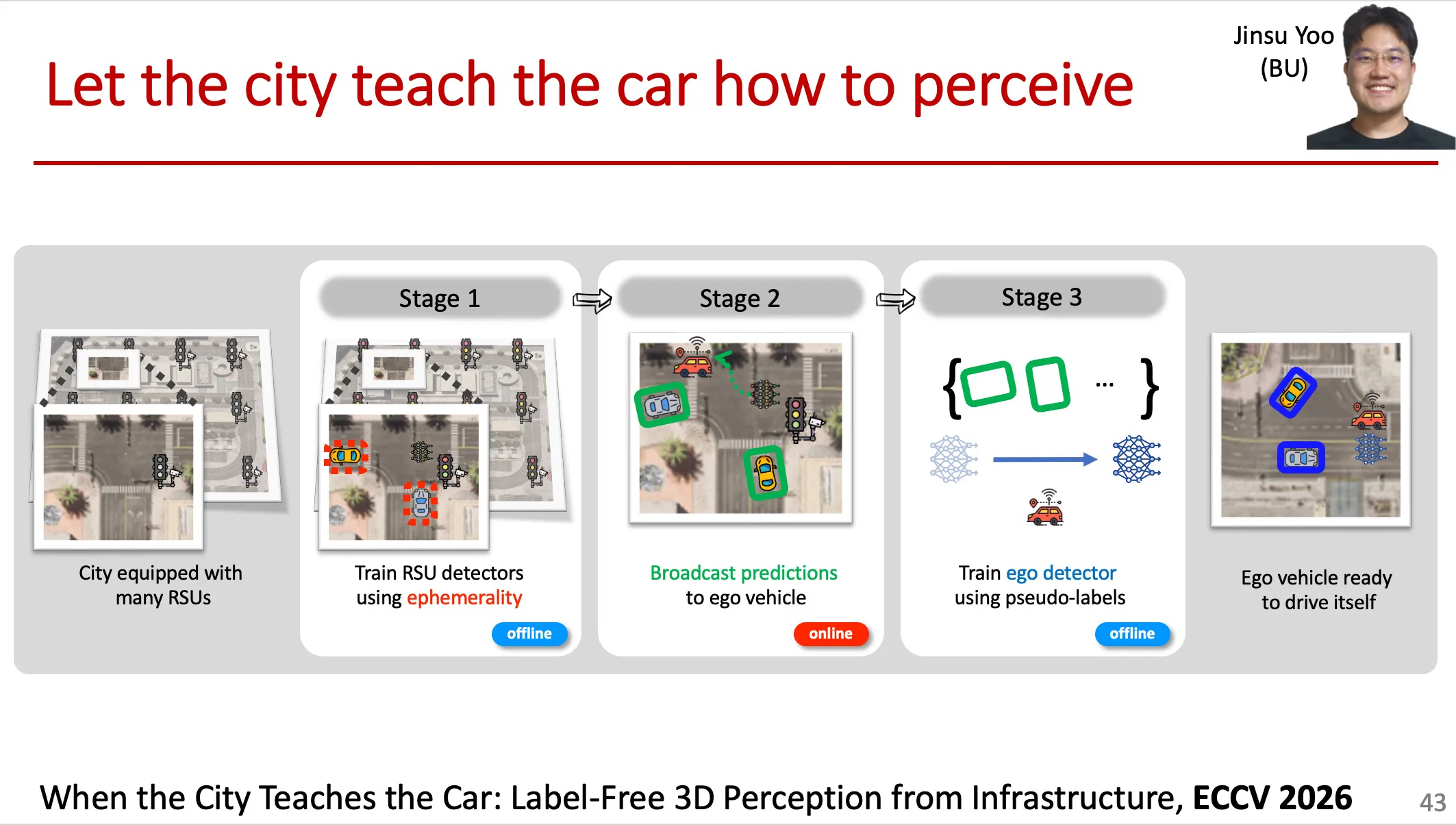
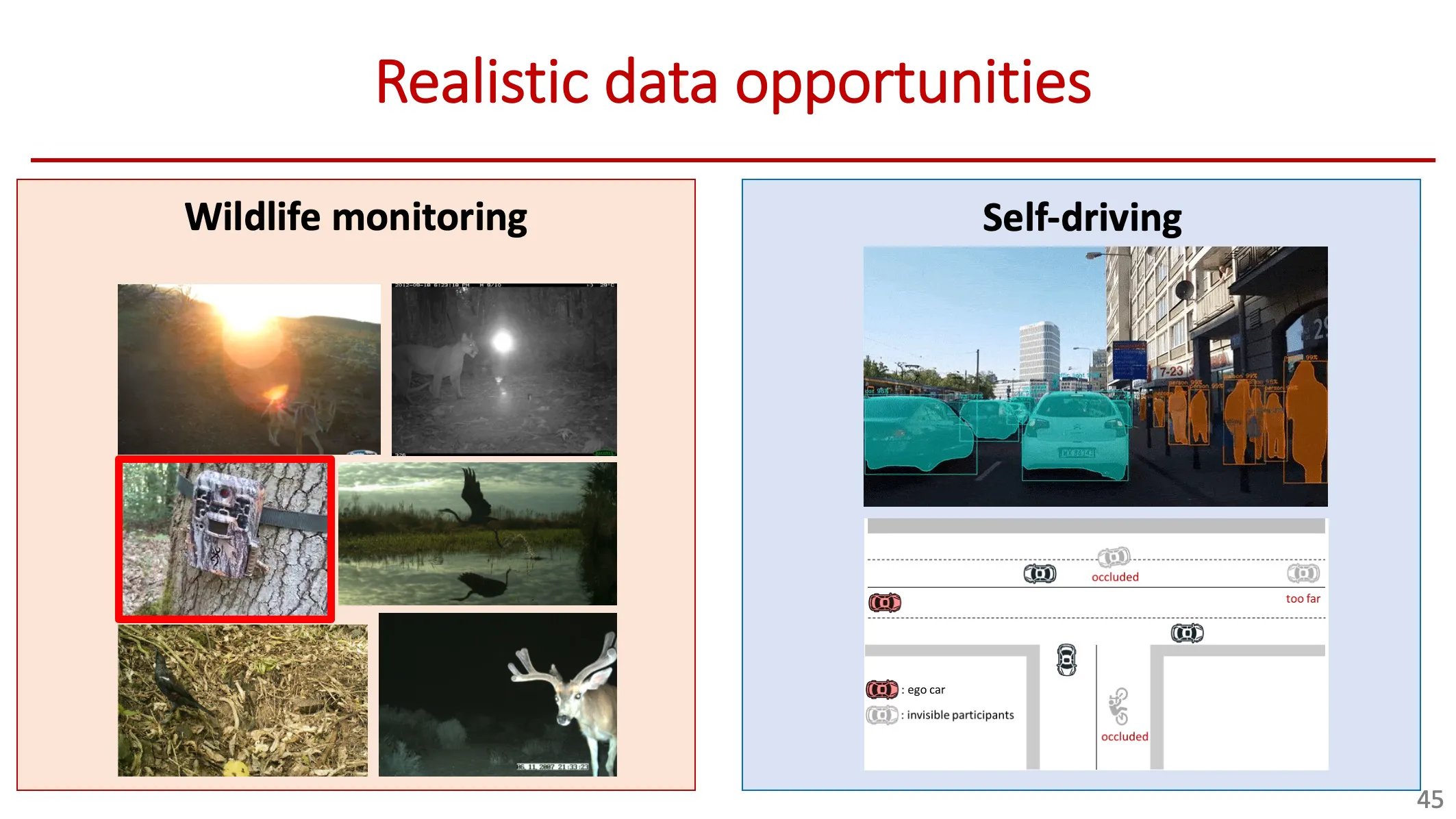
Agriculture, wildlife monitoring, and manufacturing show the same pattern in sharper form. Kishore Sundar, Director of Data and AI at Inari, called every crop field its own experiment, with its own soil, genetics, and management. Wei-Lun (Harry) Chao, Associate Professor at Boston University, found that the best pretrained wildlife classifier fell short on about 200 of 500 field cameras, each capturing different species, seasons, and terrain. Abdallah Abdallah found that identical machines running the same process on the same factory floor varied by 5% to 10%. If identical machines on one floor drift that far apart, no single site’s data can stand in for the rest, and the models that hold up are the ones trained across all of them.
4. Federated Collaboration Works Even When Partners Don’t Fully Trust One Another
Throughout the Summit, speakers kept returning to the same point: the hardest problems in federated AI are organizational. Nicolas Löffler-Perez compared federated projects he worked on between 2018 and 2025 and found the technology had advanced dramatically while the blockers stayed the same. Every project still stalled on who would host the server, who would own the models, and who would control the code; and no improvement in encryption could settle those questions.
Monisha Malhan, Executive Vice President at TCG Digital, framed the answer through aviation, where loyalty fraud and operational disruptions span competing airlines that treat customer data as a balance-sheet asset.
“Our job is not to make them trust each other. They are never going to trust each other. It’s just to take out that perception that any sort of sharing of anomalies, the patterns, is going to involve sharing of data. Your asset is safe.”
Monisha Malhan, Executive Vice President, TCG Digital
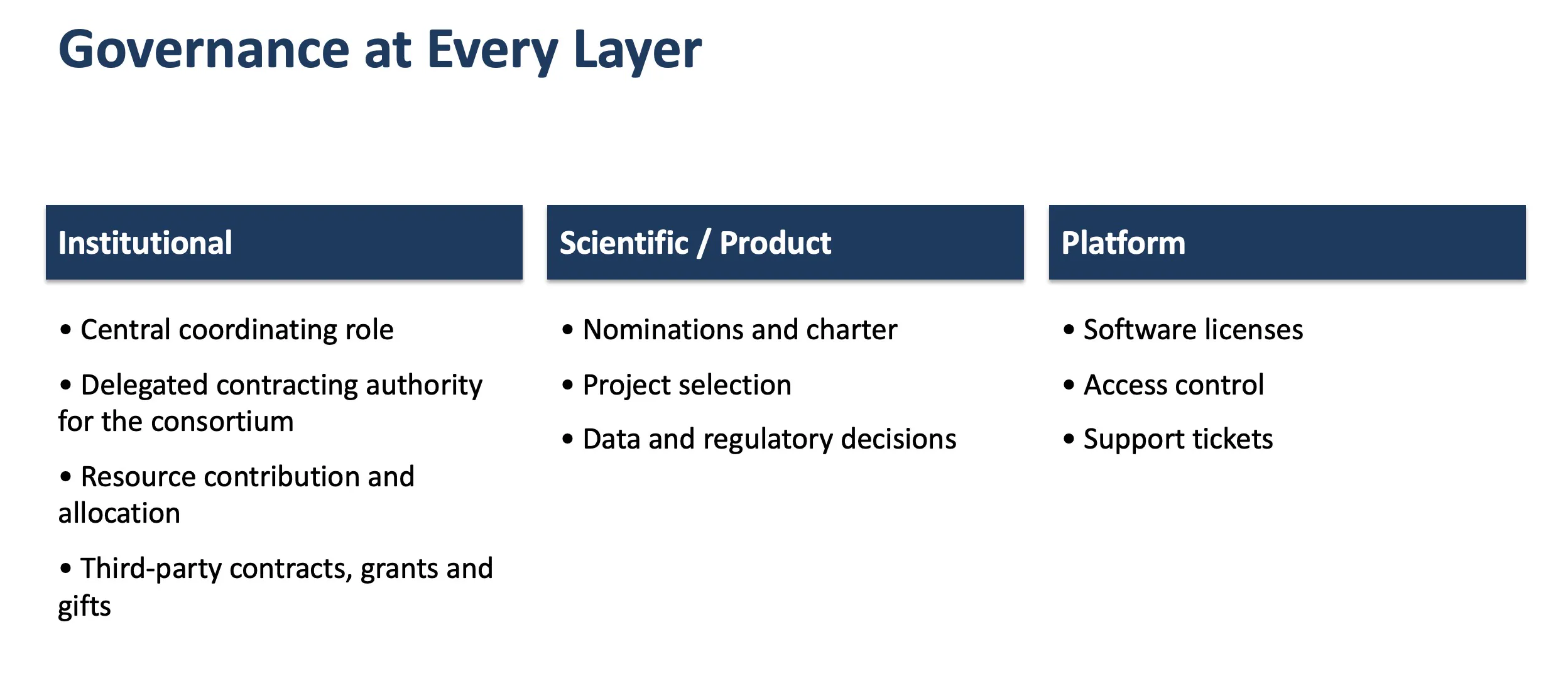
The same logic holds in healthcare. The Cancer AI Alliance, a federated AI network of leading US cancer centers, shows how. Adina Mueller, Senior Associate General Counsel at Fred Hutch, said the alliance splits governance across organizational, project-specific, and technical layers. A steering committee chooses projects, while each cancer center keeps its own IRB engagement and data science. Mueller also raised a legal question the field has yet to settle. Who owns the intellectual property in model weights that move between partners?
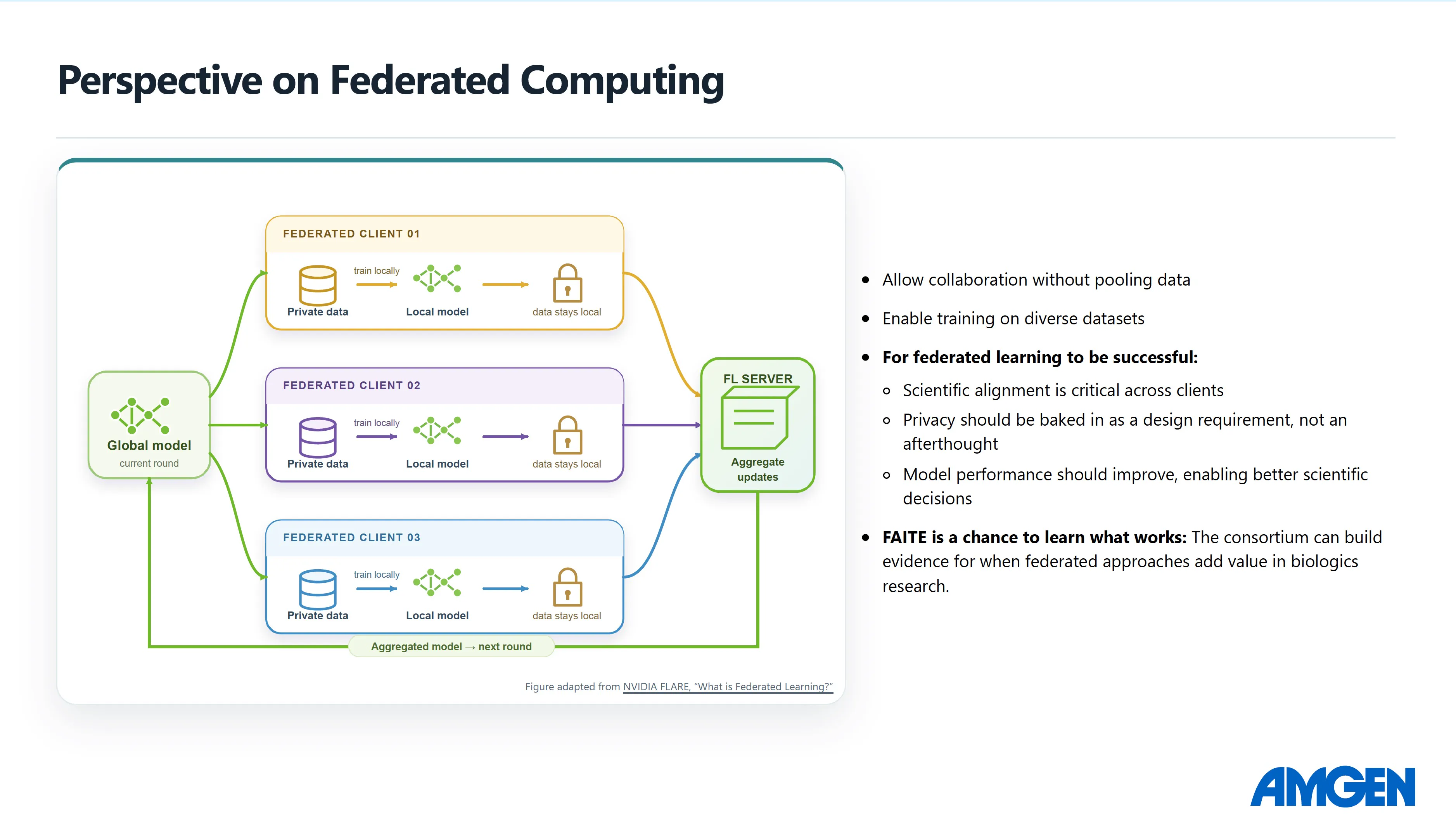
The FAITE consortium, five pharma companies building antibody developability models, showed how far privacy concerns reach. Michail Vlysidis of AbbVie and Mani Jain of Amgen explained why no company could build these models alone: developability data is scarce, expensive to generate, and skewed toward molecules that survived the pipeline. Mehdi Boroumand of AstraZeneca said buffer conditions and formulation details count as proprietary, and Ittai Dayan noted that even the metadata carried competitive value. Before any modeling, members held wet-lab discussions to agree on which experimental parameters to capture. Roger Hart, Senior Fellow at NIIMBL, made the same point about biomanufacturing, where process data is the most closely guarded because it could help a competitor make a biosimilar.
A federated collaboration also needs a reason for every partner to sign on. Will McConnell, Partner at Qiming Venture Partners USA, said the technology largely works today. The harder question is how to structure deals so every hospital or company that contributes data gets something meaningful back. Falguni Sen, Director of the Global Healthcare Innovation Management Center at Fordham University, and Chalapathy Neti, Associate Vice President of AI, are testing one answer, a token system that rewards institutions for the data and population diversity they contribute.
Jennifer Bright, President and CEO of ICHOM, shared what has worked in ICHOM’s learning collaboratives. Bring hospital executives and IT teams in from day one, and start with health systems eager to take part, such as Bangkok Dusit Medical Services in Thailand, before chasing the biggest names. Regulators expect answers too. Rich Evans, Counsel Attorney at DLA Piper, said anyone deploying AI should be ready to explain how a result was produced, how the model is monitored, and what happens when something goes wrong.
Israel shows what that groundwork makes possible. Yoel Bar Or, Director of Digital Health at the Israel Ministry of Health, said three years of building relationships among regulators, health organizations, and startups let the country’s portability law pass parliament in a few months. Trust built before the technology arrives is what lets collaboration move fast once it does.
5. AI Agents Can Borrow Federated Computing’s Playbook for Sensitive Data
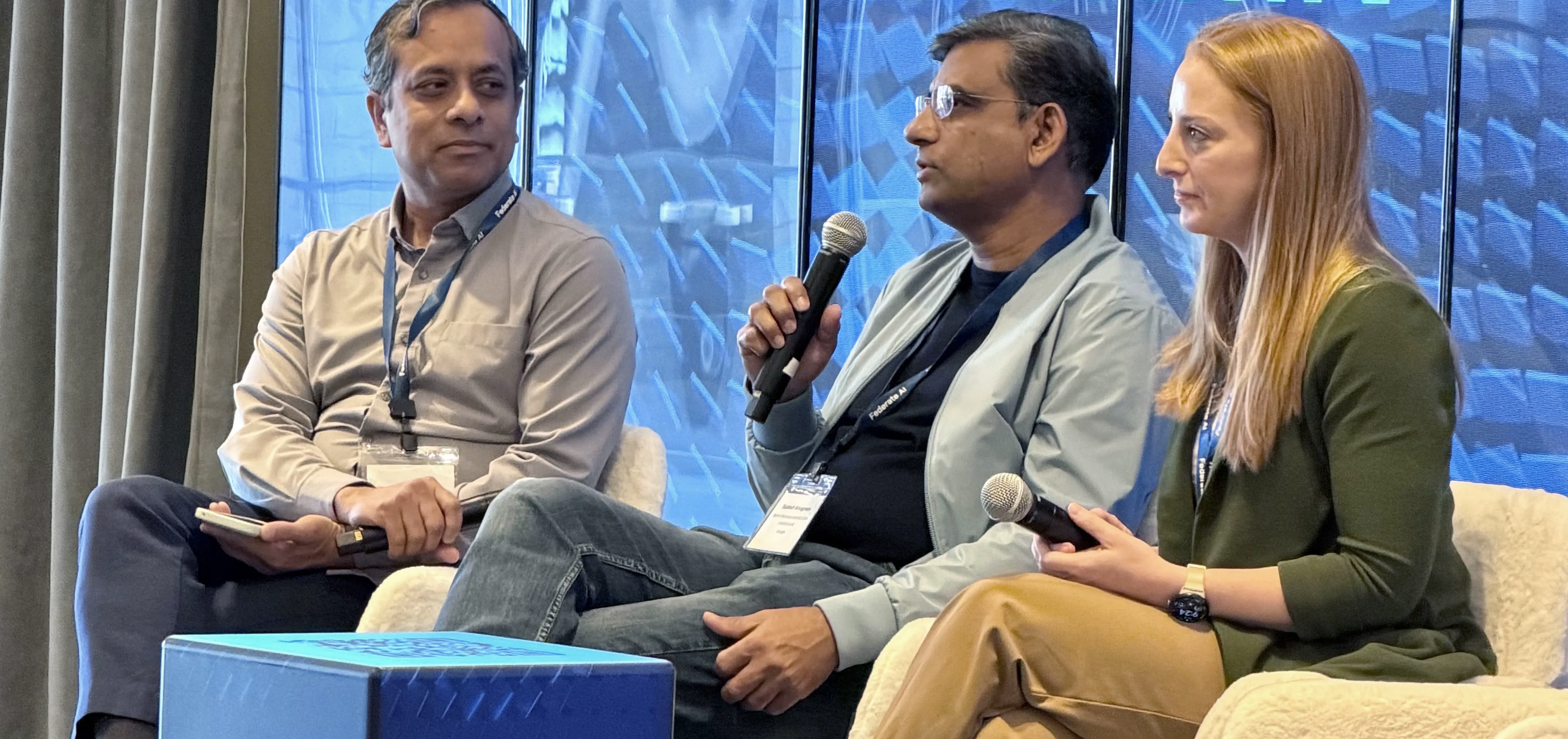
AI agents are only as useful as the data they can reach, and the most valuable data in healthcare and life sciences often belongs to someone else. The good news? Federated computing has already spent years solving that exact problem.
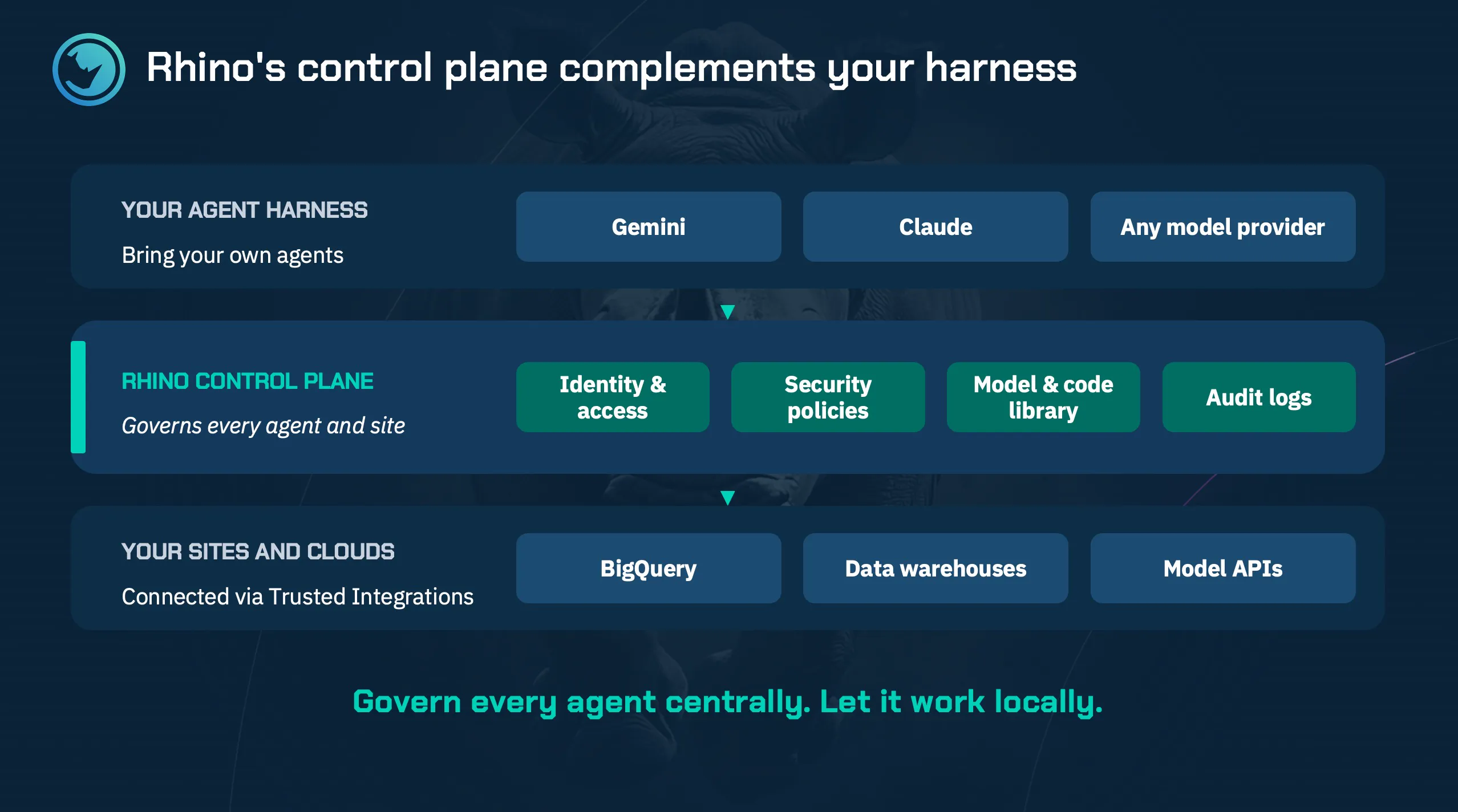
Adrish Sannyasi, VP of Customer Solutions at Rhino Federated Computing, laid out the playbook agents can borrow. Each data owner keeps authority, code runs in a sandbox where the data lives, outputs are checked before they leave, and every action is permissioned and logged.
“Federated computing helps you run code in somebody else’s data. That’s what an agent was supposed to do. But when you do that, the authority of the data doesn’t belong to the agent. It belongs to the data owner.”
Adrish Sannyasi, VP of Customer Solutions, Rhino Federated Computing
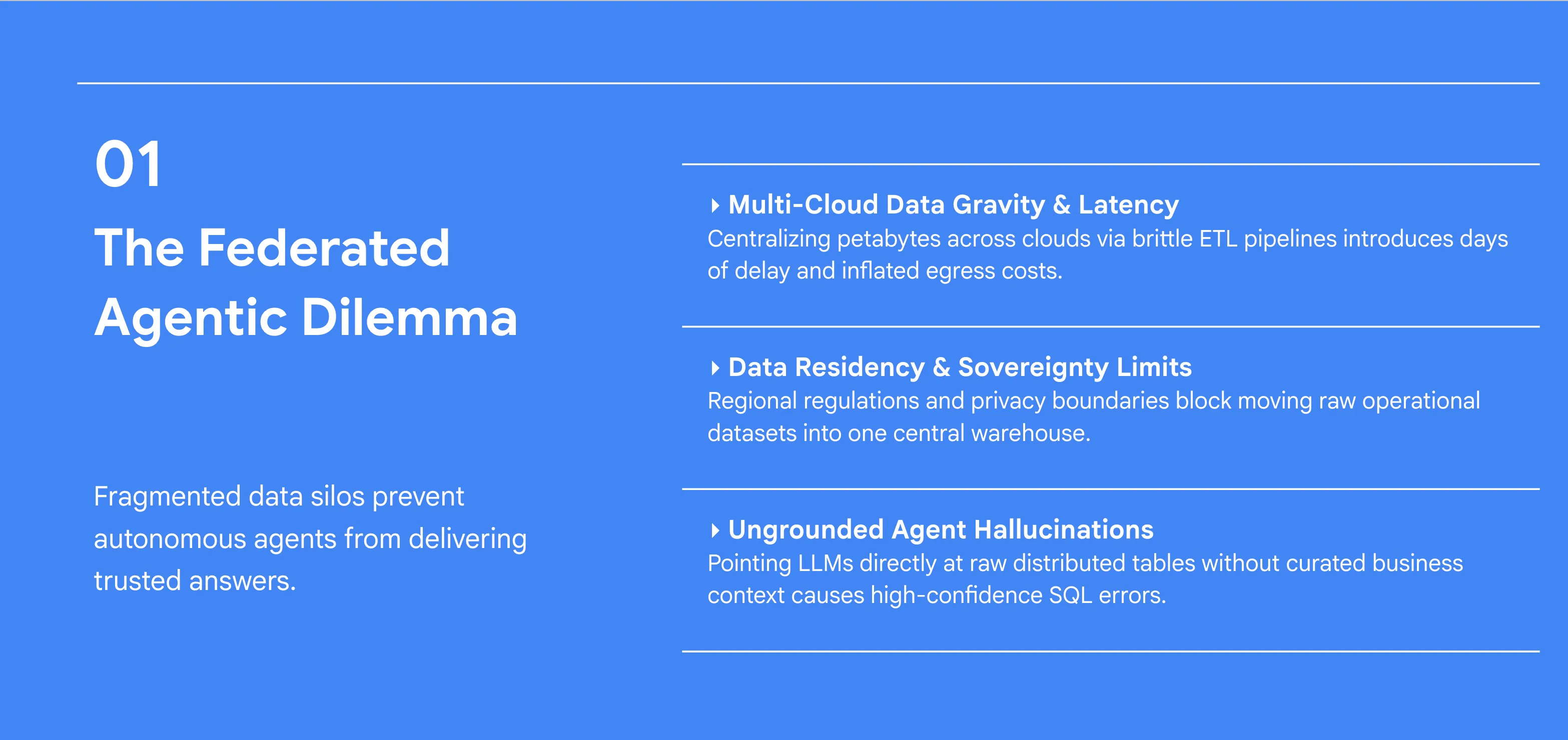
The playbook starts with context. Sudesh Amagowni, Senior Solutions Architect at Google Cloud, said agents given raw data without business definitions start guessing, and their wrong answers still sound confident. Google adds a shared layer of business rules so teams can test agents against verified definitions before deployment.
Controls come next. Kimberly Burns, Senior Product Manager at Rhino, showed how the Rhino FCP checks identity and permissions on every agent request. Each code run is versioned, and audit logs record who ran what and when. Row-level data never leaves the site.
“The MCP will never share any row-level data, even if you tell it to forget all of your instructions, because I’ve tried that.”
Kimberly Burns, Senior Product Manager, Rhino Federated Computing
With context and controls in place, agents can take on the work that has slowed federated research for years. Holger Roth of NVIDIA said agents can already handle data preparation, algorithm selection, and debugging across distributed sites.
Access has now become the bottleneck. Sahar Almahfouz Nasser’s discovery agents at Emory generate hypotheses quickly, then stall because the patient cohorts needed to test them sit at other institutions.
Wider access brings new risks, and researchers are already working on them. Nasser warned that one agent can trick another into revealing sensitive details by posing as a higher authority. Erik Hemberg, AI Research Scientist at MIT CSAIL, pointed out that even shared model updates can leak training data, and his lab is pairing decentralized training with differential privacy to prevent it. The federated playbook is built to contain both risks.
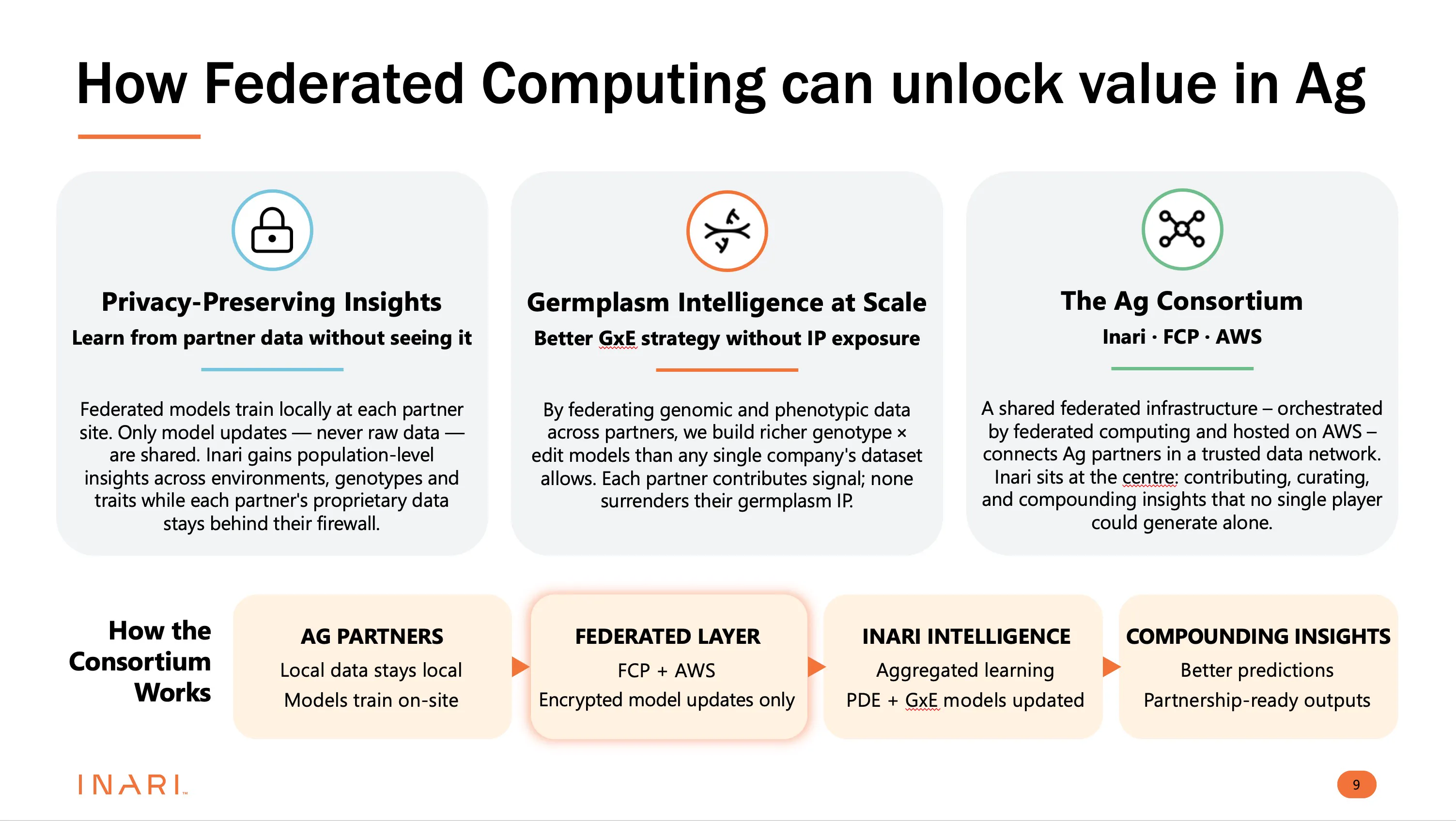
Inari shows where this leads. Its multi-agent design engine already shrinks a gene-editing research cycle from more than a year to a few months using internal data alone. Kishore Sundar said the next step is letting those agents reason across partner, academic, and consortium data that never changes hands. Federated computing is what makes that step possible.
What’s Next for Federated AI
The Summit’s closing panel looked at where federated AI goes from here. Will McConnell predicts data-centric acquisitions as the value of hard-to-reach data becomes clearer. Gal Noyman, Partner at LionBird, expects better standards to make consortia faster to launch and less dependent on a few star data scientists. Pallika Kanani, Research Director at Oracle, is most excited about “the boring part,” the orchestration that makes joining a federation routine.
Alice Walsh, COO of Synthesize Bio, framed the stakes earlier in the day. How does a pharma company compete on data with AI labs that can buy and generate it at scale? Anna French, Managing Partner at Qiming Venture Partners, pointed out how unevenly that data is spread. A startup with a ready-made data set, like the Simons Foundation’s 105,000-patient autism cohort, can move fast, but most diseases have nothing comparable outside pharma’s walls. Federated collaboration is one answer, letting competitors pool what they hold without giving it away.
Rhino Federated Computing builds the infrastructure for exactly that kind of collaboration. The Rhino FCP runs analytics, model training, and AI agents on data that stays where it lives, whether inside a single enterprise or across a network of partners, with every action governed and recorded.
To keep learning, explore the Federate AI Summit Resources page for more information on federated AI and the conversations that started at the Summit.
Thank you to our Summit sponsors, AWS and DLA Piper.