Rhino Federated Intelligence
Distributed data. Unified intelligence.
Create networks with your partners to turn sensitive data into AI-ready assets, without it ever leaving its source.
The Bottleneck
The most valuable data in regulated industries can't be centralized.
Patient records, molecular designs, and financial transactions sit behind walls no data, no models, and no agents can cross. Regulatory compliance, data sovereignty, and intellectual property protection make the most valuable inputs excruciating if not impossible to pool.
As a result, innovation can't happen. AI can't meet the moment. Collaboration moves to the backlog.
The Rhino Difference
Federated Intelligence creates shared data processing infrastructure for enterprises and their partners to gain value from sensitive, isolated data that can't move.

Launch
- Federated workloads operate on data that never moves
- Partner data becomes usable without anyone seeing a raw row
- Runs on your existing stack, any environment, language, framework
- Expert support for implementation and program management

Govern
- Compliance that's architecture, not an afterthought
- Access management, audit logs, and approvals from day one
- Privacy Enhancing Technologies throughout the stack
- Certified and compliant to the highest standards


Scale
- Usage metering, VM pooling, and auto-scaling for control
- Managed compute and participant onboarding
- Forward-deployed engineers, included
- Live network, not a science project
Federated Intelligence in Action
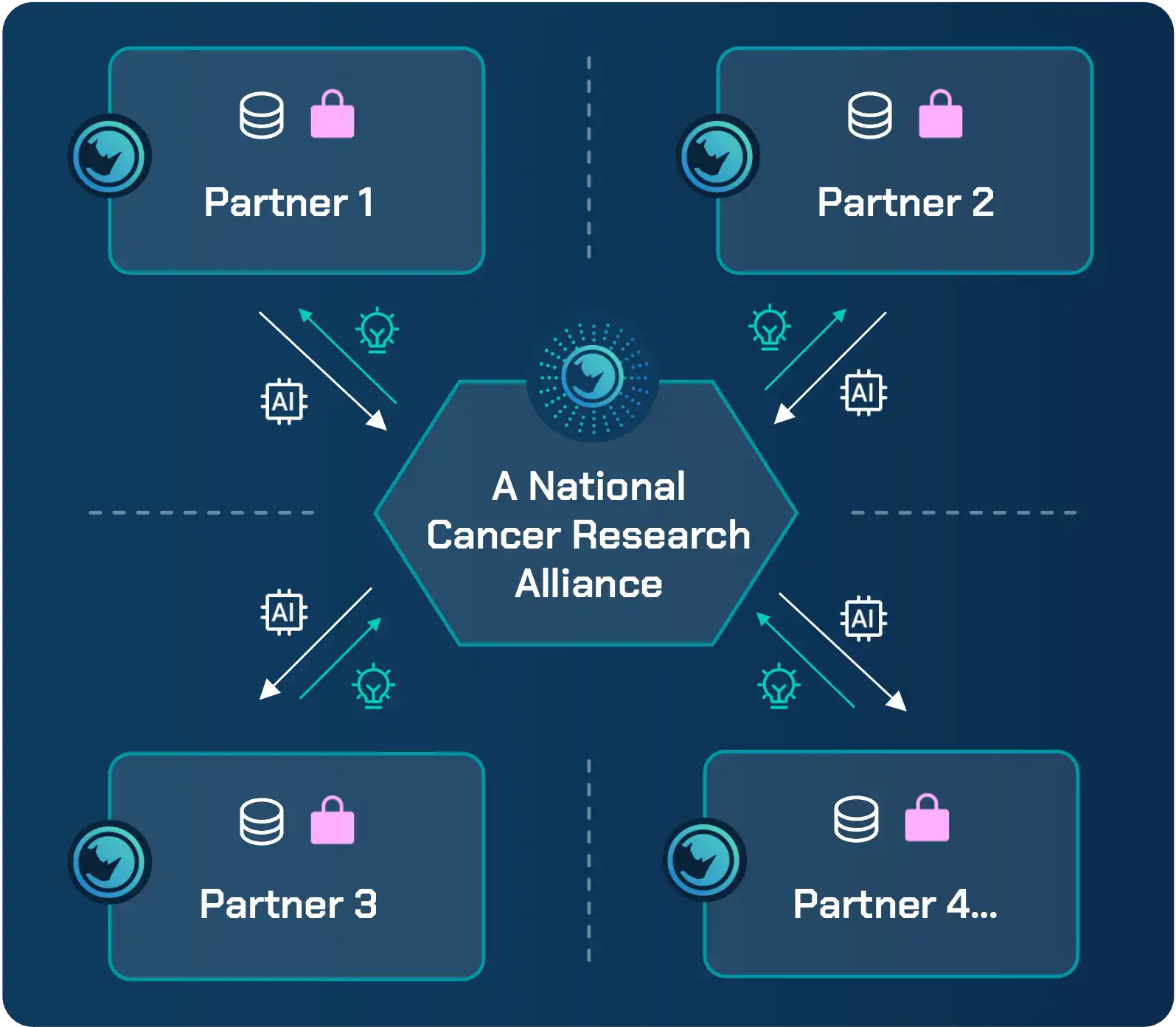
Rhino provides the federated computing infrastructure powering research between the world’s top cancer research institutions.
- Launched first wave of 8 AI and clinical innovation projects
- Expanding to 8+ new academic medical centers in 2026
- AI innovation: LLMs for EHR, agentic data exploration, cancer foundation modeling
- Clinical innovation: prediction of therapeutic success and post-therapeutic sequelae
- Value for researchers: Researchers can analyze and model with broader, more disparate data from all sites. Models improve continuously with federated learning across participating cancer centers.
What Rhino Federated Intelligence Makes Possible

Federated Models — Train, fine-tune, and run inference across distributed data that never moves, building a model library that improves with every participant and data source added.
Federated Data Products — Harmonize data to common standards or custom schemas and then make that AI-ready data available the whole network can activate.
Federated Agents — Deploy AI agents across distributed data environments and orchestrate cross-site workflows with data privacy and permissioning guardrails in place.
Federated Analytics — Enable data scientists, researchers, and other network participants to run cross-site exploratory data analysis, statistical modeling, and multi-modal dataset creation.

In Production Today
Whether you are starting your first network or scaling one already in production, Rhino has the infrastructure, experience, and team to get you there.
100+
Biotech partners
30
Models
3M+
Inference runs
Use Case Spotlight
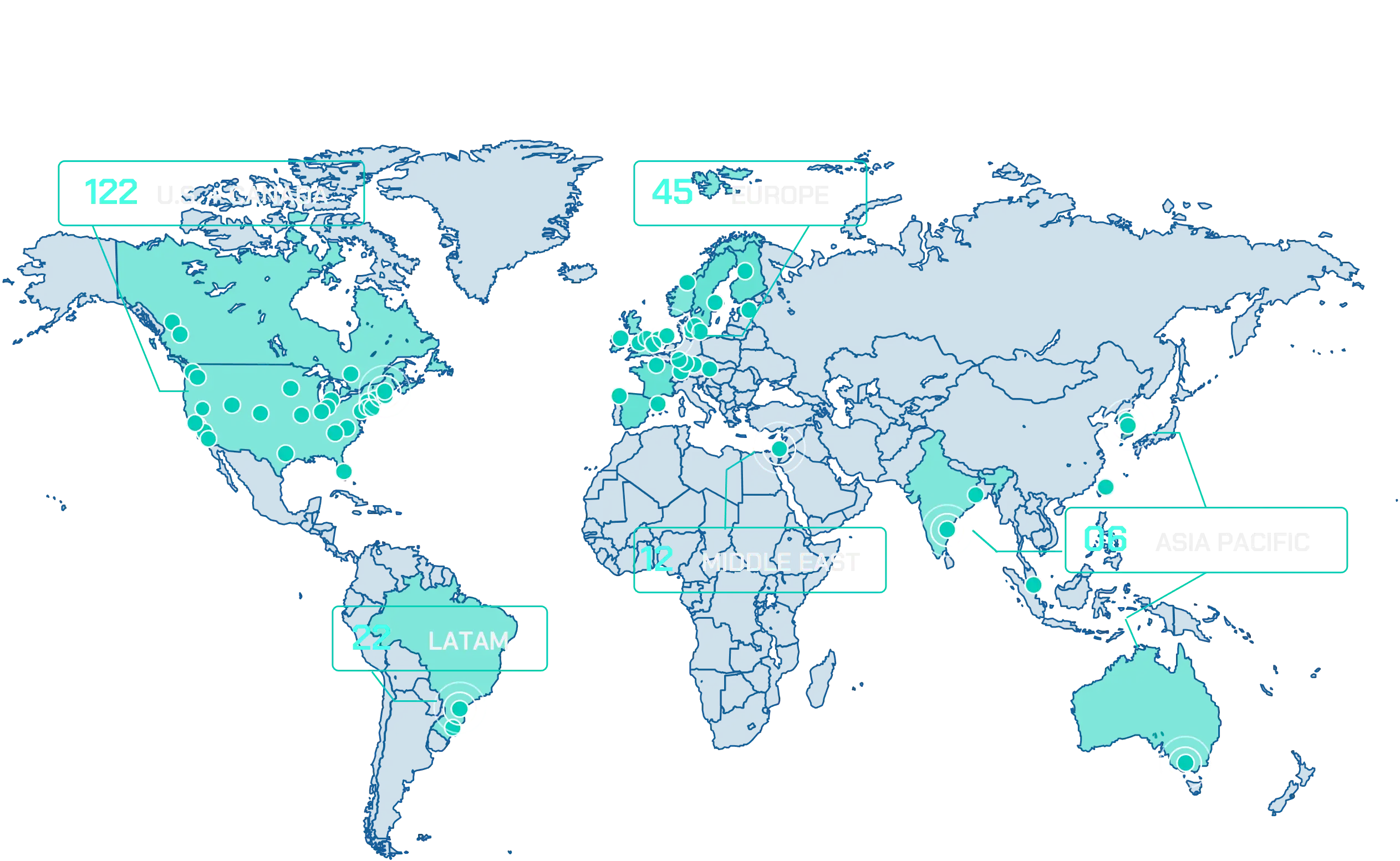
Our Federated Intelligence solution powers a drug discovery network run by a Top 5 Pharma, fueling the success of 100+ biotech partners, with over 30 federated models and over 3 million inference runs.
A cancer research alliance connects four prominent cancer research institutions, running simultaneous AI research programs across millions of patient records while every record stays local.
In utilities, electric grid operators collaborating AI-based cyber threat detection across security telemetry that can't leave its source.

