Tomorrow’s healthcare: united by purpose, powered by real-world data and AI


Source: Economist Enterprise
A global real-world data summit in Cambridge, Europe's leading biotechnology hub, kickstarts a cross-sector movement to optimise healthcare's most under-utilised resource.
The article was developed and funded by AstraZeneca. The FORWD Summit meeting was organised and funded by AstraZeneca.
Health systems everywhere face familiar challenges: ageing populations, a rising incidence of chronic disease, widening inequities and increasingly fragmented care.1-5 Real-world data (RWD), which encompasses all data gathered outside a clinical trial—from insurance claims and electronic medical records to wearables such as fitness trackers6—has never held greater potential to address these challenges, driven by rapid advances in artificial intelligence (AI) and an expansion in digitised health records.
The inaugural FORWD Summit, held on March 16th-17th 2026 in Cambridge, brought together 100 leaders from academia and the healthcare, tech and pharmaceutical sectors, united by a single question: what would it take for RWD and AI to drive not only isolated successes, but system-wide progress across research, care and policy?
The FORWD Summit acted as a collective commitment to transform how data, technology and partnerships reshape healthcare.
The answer was architectural: a modern health system cannot rely on fragmented evidence generation and isolated datasets, but requires governance, partnerships and AI integration. The summit converged around five key pillars to give shape to a movement already gathering pace, a framework to ensure that RWD and AI shift from peripheral tools to core healthcare infrastructure, delivering meaningful progress for patients.
Pillar 1
Patients at the centre of data and care
RWD must be built around people, reflecting their lived needs and ensuring that patients benefit directly from sharing their data, whether through earlier detection, more personalised interventions or transparency on how their information is used.

Professor Christopher Licskai
Professor Christopher Licskai, a respirologist at Western University's Schulich School of Medicine and CEO of Best Care, a primary care-led, disease management programme that is grounded in guideline-directed care and harnesses real-world evidence to improve patient outcomes, said that RWD insights allow clinical teams to build “a more holistic view of patient outcomes and their lived experiences, for example through capturing quality of life measures”. These insights can help to reshape clinical practices and ensure that research is focused on delivering improvements that really matter to patients. Keeping patients at the centre of every development is what ensures that progress in healthcare is both effective and trusted.

By coming together, we can do a better job for patients worldwide, unlocking the full potential of real-world data and AI. Dr Alexander BedenkovVice-president for global evidence, biopharmaceuticals medical, AstraZeneca

Pillar 2
Live, integrated and permanently linked data ecosystems
“One of the largest issues we face in turning insight into action is the fragmentation of data. Healthcare systems have never been so insight-rich but action-poor. Valuable information sits locked within individual institutions, unable to flow across primary, secondary, tertiary and community care settings where it is most needed,” explained Alexander Bedenkov, vice-president for global evidence, biopharmaceuticals medical, AstraZeneca.
The cost is tangible: large health organisations face an average of $50m in data integration costs each year, and the delays are equally damaging. As Melanie Ivarsson, chief executive of the UK Health Data Research Service, observed: “It takes longer to access some data than to get ethics approval for a clinical trial.”
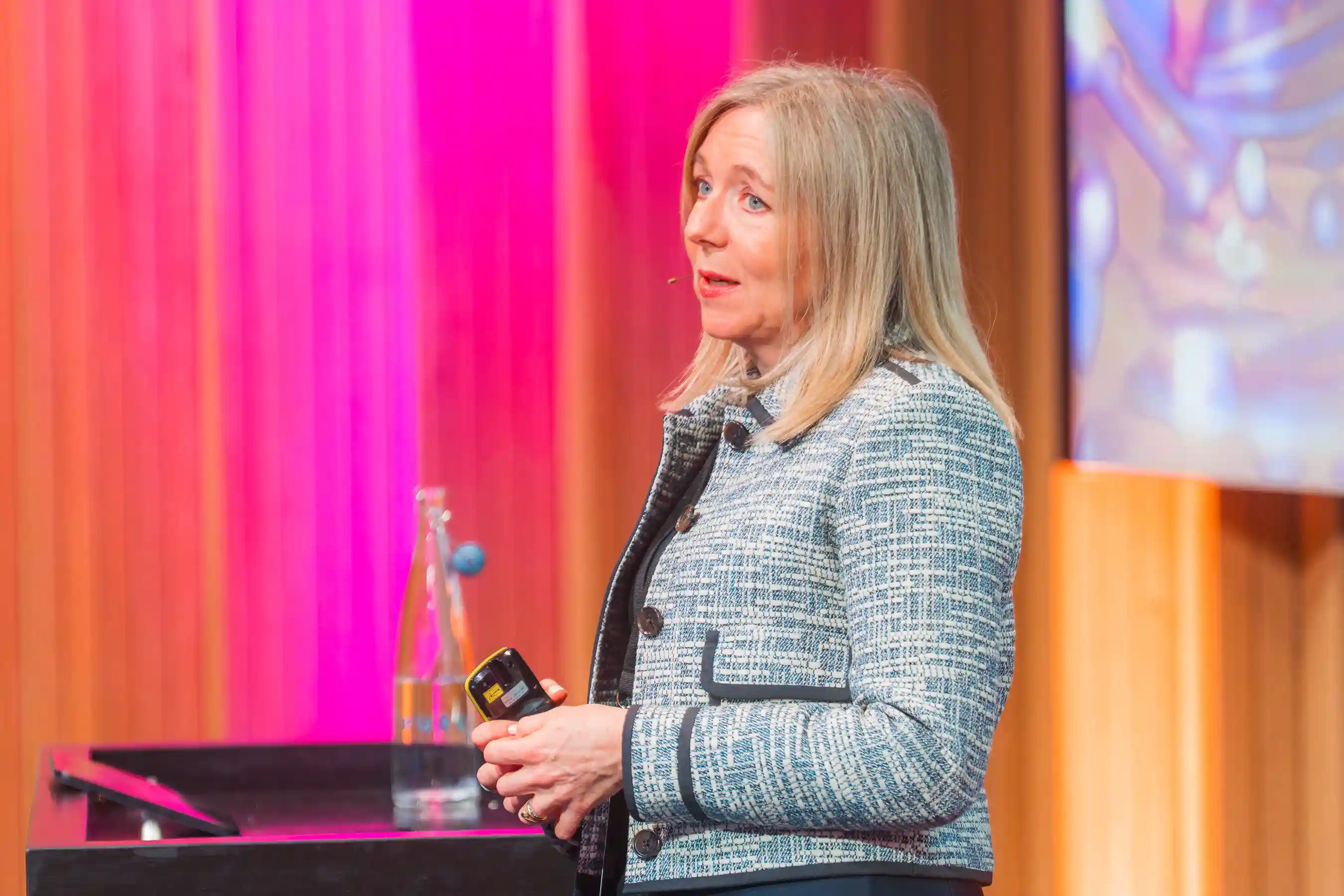
Dr. Melanie Ivarsson
Delegates discussed the practical conditions for the change needed: shared standards that allow systems to communicate, analytical approaches that protect sensitive data without locking it away, and governance frameworks that give institutions the confidence to collaborate. Connecting data across the full patient care journey is the foundation on which every other pillar depends, and only sustained cross-sector commitment will build it.
Pillar 3
Holistic, equitable care and research
In many health systems, only a fraction of eligible patients receive guideline-directed therapy, with profound consequences for survival. RWD can identify where care falls short, which patient groups are underserved, and which interventions successfully close the gap.
“RWD helps us understand the complex healthcare system…you can start to look at what solutions might be effective in a real-world setting, formulate an intervention and measure its impact in the real world,” explained Professor Licskai.
Beyond care delivery, RWD has proven to be an impactful tool across the research and development pipeline, identifying potential drug repurposing opportunities, locating the best research sites based on real disease patterns, predicting recruitment challenges, and ensuring that study populations reflect the true diversity of patients the resulting treatments will serve. When applied equitably, RWD can redesign the system around the patients it has historically left behind.
Pillar 4
Transformative partnerships for scalable innovation and policy change
The fragmented nature of RWD means that no single institution can unlock its value alone. The summit highlighted partnership not as a complement to progress, but as its prerequisite.
Dr Bedenkov noted a defining message from the summit: “We need to move from a traditional product-based model to a public-private platform model. By coming together, we can do a better job for patients worldwide, unlocking the full potential of real-world data and AI.”
Best Care's work in Ontario offers a compelling illustration of how rigorous RWD-driven approaches to chronic disease management can deliver patient benefit, demonstrating a 51% reduction in hospitalisations related to chronic obstructive pulmonary disease (COPD)⁷. Best Care continue to use this evidence to drive conversations with policymakers and global partners, supporting wider system-level change.
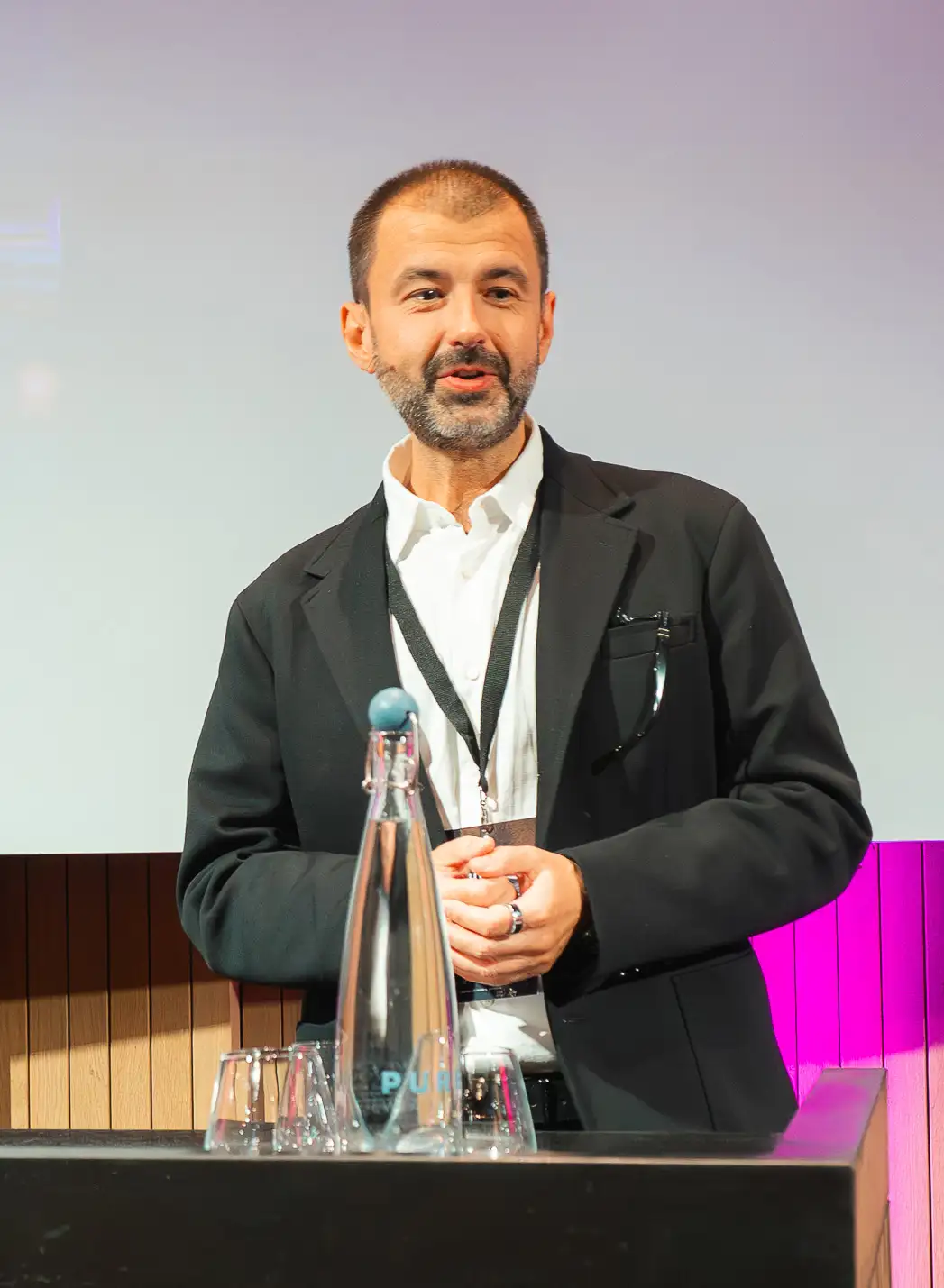
Dr Alexander Bedenkov
Done well, partnerships do more than improve outcomes. They generate the robust, population-level evidence that informs health system policy and drives the regulatory modernisation needed for a data-driven era.
An end-to-end evidence engine capable of compressing the timeline from data to discovery, and from discovery to patient benefit, is within reach.
Pillar 5
Leveraging AI
Perhaps the most profound shift discussed at the summit was AI's evolution from accelerating tasks to enabling agentic, fully integrated evidence ecosystems. Throughout presentations, delegates explored AI's application at every stage of the evidence lifecycle: identifying disease signals in population data years before clinical presentation, optimising trial recruitment, and modelling how real-world patient populations respond to treatment in ways that controlled trials cannot capture.
Speed, however, must not outpace trust. AI's integration into clinical and research processes requires validation frameworks, transparent model development, clear consent pathways, explainability standards and robust human oversight.
With the right guardrails in place, AI's potential is vast. An end-to-end evidence engine capable of compressing the timeline from data to discovery, and from discovery to patient benefit, is within reach.

The blueprint for the future
The FORWD Summit acted as a collective commitment to transform how data, technology and partnerships reshape healthcare, building a system that learns continuously, responds proactively and reaches the patients most likely to be missed. That is the future the summit set out to accelerate, one in which RWD delivers real-world impact and where the invitation to join the FORWD movement is open to all. As Professor Licskai put it: “It's real-world data. It's compelling. It's actionable. It can't be ignored.”
Z4-82846, June 2026
References:
1. World Health Organisation, “Ageing and health”. https://www.who.int/news-room/fact-sheets/detail/ageing-and-health (accessed June 2026).
2. Xianshang Z et al., “About half of older adults have two or more chronic conditions at the same time: a systematic review and meta-analysis”, Frontiers in Public Health, 2025.
3. World Health Organisation, “Health inequities are shortening lives by decades”. https://www.who.int/news/item/06-05-2025-health-inequities-are-shortening-lives-by-decades (accessed June 2026).
4. OECD, Integrating care to prevent and manage chronic diseases. https://www.oecd.org/en/publications/integrating-care-to-prevent-and-manage-chronic-diseases_9acc1b1d-en.html (accessed June 2026).
5. World Health Organisation, “Integrated people-centred care”. https://www.who.int/health-topics/integrated-people-centered-care (accessed June 2026).
6. FDA, “Real-world evidence”. https://www.fda.gov/science-research/science-and-research-special-topics/real-world-evidence (accessed June 2026).
7. Licskai C et al., “Quantifying sustained health system benefits of primary care-based integrated disease management for COPD: a 6-year interrupted time series study”, Thorax, 2024; 79(8): 725–734.

